



On September 18, 2025, the Seminar themed "The Era of Anti-involution: Opportunities and Challenges of Value Restructuring in the Capital Market" (the “Seminar”), hosted by the Capital Market Research Center of Dishui Lake Advanced Institute of Finance, Shanghai University of Finance and Economics (SUFE-DAFI), and co-organized by the Hongqiao Overseas Development Service Center, was held in Shanghai Hongqiao International Central Business District (“Hongqiao International CBD”).
The Seminar was presided over by CHU Yile, Director of the Strategic Cooperation Department of SUFE-DAFI.
During the keynote speech session, a leadership from the Anti-monopoly Office of the Shanghai Municipal Administration for Market Regulation participated in the discussion and delivered a speech themed “Anti-monopoly Compliance Management and Compliance Supervision under Anti-involutionary Competition”, in which he explained the strategies for enterprises to build anti-monopoly compliance system and the standardized norms for fair competition compliance.
Subsequently, Professor CHEN Xin, Director of the Capital Market Research Center of SUFE-DAFI, by taking the year-on-year trend of China's Producer Price Index (PPI) as the starting point, systematically explained the logic and impact of the “anti-involution” policy, and discussed the differences in economic environment, industrial structure and governance methods between this round of anti-involution policies and the supply-side structural reform in 2015, and pointed out that the anti-involution policy thinking had shifted from emphasizing industry self-regulation in 2024 to regulatory guidance in 2025 gradually. Professor CHEN Xin considered that in the short term, the anti-involution policy would also bring some negative impacts, e.g. the manufacturing Purchasing Managers' Index (PMI) showed that the increase in raw material prices was greater than that of finished product prices; slower new investments in some industries had led to great month-on-month decline in fixed asset investment, however, China had released strong supporting measures that were expected to mitigate these impacts; in the medium and long term, the anti-involution policy would improve the supply-demand balance of relevant industries, improve enterprises’ profitability, facilitate the PPI to return to a positive number, and the valuation of the stock market, especially Hong Kong stocks, had not yet fully priced it. Professor CHEN Xin also emphasized that the urgency and significance of anti-involution had become clear, and the government authorities demonstrated unwavering determination, but the final effect still depended on the implementation measures and the promotion pace.

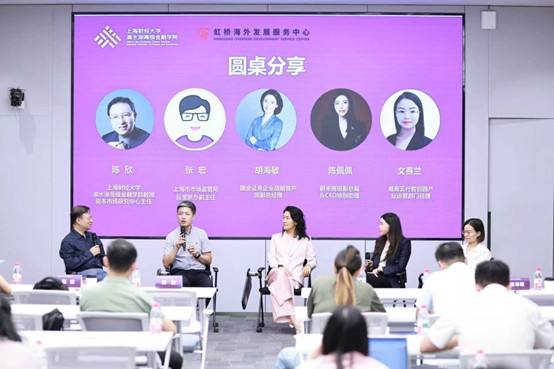
Guests included the leadership from the Anti-monopoly Office of the Shanghai Municipal Administration for Market Regulation; HU Haimin, Deputy General Manager of the Corporate Strategic Client Department of Sinolink Securities; CHEN Peipei, Senior Vice President and Special Assistant to CEO of NIO; and WEN Sailan, Manager of the Industrial Operation Department of Wego Medical Park, attended the roundtable discussion that was presided over by Professor CHEN Xin. The four guests discussed topics such as regulatory logic, industrial trends, companies’ responses, and industry transformation.
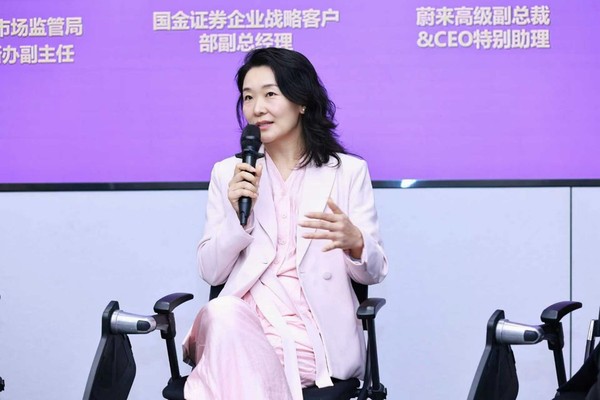
Deputy General Manager HU Haimin, from the perspective of securities firms, considered that anti-involution was an inevitable phenomenon when the economy developed to a specific stage, and the labor regulations during the British Industrial Revolution, the improvement of regulatory provisions in the US in the 1960s and 1970s, as well as the relocation of production capacity of Japan in the 1980s and 1990s all conformed to the same logic as China's current anti-involution. Ms. HU believed that securities firms could support enterprises with sufficient production capacity and the demand of going global, through cross-border merger and acquisition (M&A), listing on the Hong Kong Stock Exchange and other services, so as to support enterprises’ integration and improve the efficiency during the wave of M&A.
Combining NIO’s actual situation, Vice President CHEN Peipei stated that China's automobile industry was trapped in a price war currently, showing that automobile enterprises achieved revenue growth but didn’t see profit growth; and the competitive pressure had even spread to the industrial chain from complete vehicles, seriously affecting suppliers’ profit margins and delivery stability. In response to this situation, related national authorities issued a series of industry guidance successively, requiring enterprises to focus on technological innovation, and guiding the industry to shift to “qualitative improvement” from “quantitative growth” and to avoid disorderly and malicious competition. Ms. CHEN pointed out that NIO adhered to long-term strategy, kept long-term investment in core intelligent technologies, battery-swapping network, and user experience, rationally responded to involution in the industry, built differentiated core capabilities through measures (e.g. optimizing the organizational structure, improving the efficiency, implementing the multi-brand strategy and the internationalization strategy), and conveyed its determination to pursue healthy and sustainable development to the market and international investors.

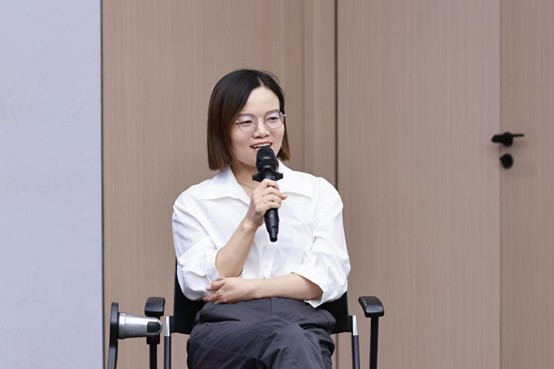
Starting from the medical device industry, Manager WEN Sailan held that enterprises in the traditional consumables market were confronted with fierce competition and the industry should find a new growth path; therefore, Wego Group expanded to Shanghai from Weihai, Shandong Province, and was exploring in the consumer medical and big health field to seek its second growth curve. Ms. WEN introduced that “going global” acted as Wego’s second core measure to address involution, specifically, in May 2025, Wego Medical Park, also as the headquarters base of Wego Overseas Group, was officially opened for operation in Hongqiao, Shanghai, for the purpose of actively facilitating the overall development of the overseas market and advancing its products, industries and services to go global; meanwhile, Wego actively supported the “going global” service strategy of Hongqiao, and cooperated with Hongqiao Overseas Development Service Center to establish and launch the “Hongqiao Medical Device Going Global Ecosystem Alliance”, aiming to build a public demonstration service platform to support upstream and downstream enterprises to “go global”. In addition, from the perspective of industrial park operation, Wego Medical Park, under the leadership of Wego Group as a leading enterprise in the industrial chain, focused on the medical devices and big health, and was committed to building an industrial chain collaboration-oriented characteristic industrial park, thus avoiding involution in low-price investment promotion and achieving the agglomeration effect.
The four guests discussed the multi-level challenges and opportunities under the background of anti-involution from multiple dimensions, including supervision, capital market, industry and enterprises, and industrial ecology, offering targeted inspiration for development of the industry.
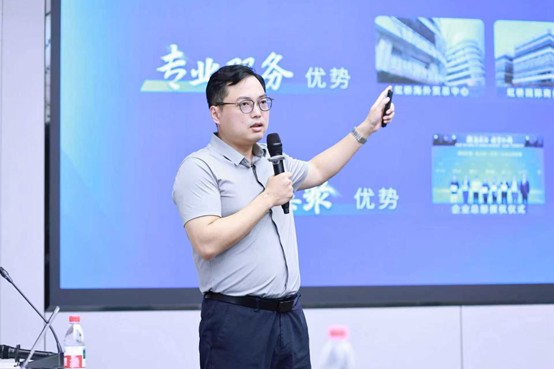
On the Seminar, ZHU Yinghua, Director of the Investment Promotion and Public Service Center of the Management Committee of Hongqiao International CBD, introduced Hongqiao International CBD to the attendants, and he stated that as an important part of the national strategies, the Hongqiao International Open Hub aimed to support the competitive production capacity, high-quality equipment, and technical standards to go global by taking Hongqiao International CBD as the core and connecting the industrial and service resources in the Yangtze River Delta region; in addition, through the "1+3" Service Model, Hongqiao kept providing higher international convenience for enterprises and practically supporting private enterprises to “go global”.
The Seminar not only provided a platform for enterprises to upgrade their awareness and communicate with each other, but also demonstrated SUFE-DAFI’s academic accumulation and active practice in capital market research, industrial services, and policy advocacy. In the future, SUFE-DAFI will continue to join hands with regulatory authorities, financial institutions, and industrial enterprises to build a high-level practice-oriented dialogue platform, so as to facilitate enterprises to achieve high-quality development in healthy competition.