



In his first month as Dean of Dishui Lake Advanced Finance Institute, Shanghai University of Finance and Economics (“SUFE-DAFI” or the “Institute”), Professor YAO Yang clearly proposed in an exclusive interview with Caijing Magazine that SUFE-DAFI should carve out a unique position between academia and practice: to “be academically ambitious and practically grounded”.
He pointed out that the Institute must, on one hand, root itself in Lingang, a frontier of reform, and serve the national strategic task of developing an offshore economy pilot zone; on the other hand, it must keep China’s broader interests in mind, directly addressing major practical issues such as financial system reform and capital market restructuring; furthermore, it must take a global perspective to explore sustainable paths for China’s solutions in the international context.
He emphasized that the Institute’s mission was not only to publish academic papers, but more importantly to cultivate scholars who can understand and solve real-world problems, fostering positive interaction between research outcomes, policy-making, and economic development. He proposed establishing a mechanism to allow young faculty to take a one-year leave from campus to hold temporary positions in government or frontline practical work, enabling them to experience the entire process of economic operation and policy implementation firsthand. This would help them identify solutions and inspire research ideas based on real-world challenges. Meanwhile, SUFE-DAFI would leverage its own think tank platform to guide faculty in drafting policy reports and supporting decision-making, thereby providing more valuable academic support for China’s financial reform and development.
This not only specified the Institute’s positioning, but also lays an institutional foundation for “conducting research that addresses real-world problems”.
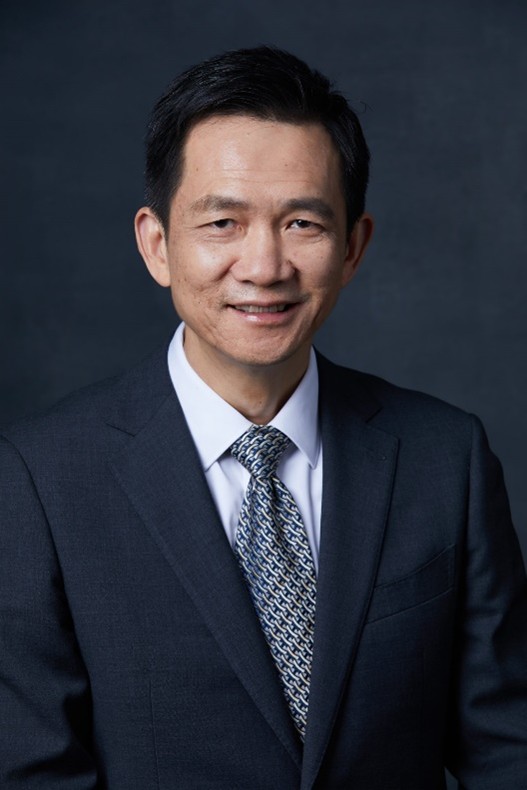
About YAO Yang
Dean and Professor of Dishui Lake Advanced Finance Institute, Shanghai University of Finance and Economics (SUFE-DAFI), Visiting Professor of Peking University
On Shanghai:
“Admiration for Southern China” Among a Generation
Caijing: You recently released a video explaining why you started your life as a migrant in Shanghai and the cultural differences between Beijing and Shanghai. The video has garnered a strong response, with much resonance as well as some controversy. What are your thoughts on this?
YAO Yang: My wife and I have always wanted to live in southern China. I grew up in Xi’an, living in the western suburbs at the time, which was part of Xidian Group. This was a factory built during the First Five-year Plan period, with employees from all over the country, including many from southern China, and several of its factories were directly relocated from Shanghai. Although Xidian Group had been in Xi’an for a long time, it had little connection with the city itself, and we never considered Xi’an our hometown. Back then, state-run large factories were like small societies, taking care of everything from birth to death for their employees. For example, the doctor who delivered my son was the same doctor who delivered me, and this remained the case for decades. Within the factory area, it seemed everyone shared a common aspiration: to move to southern China. When we were applying for university, few of us chose schools in Beijing; most of us headed south. For instance, my wife’s college entrance exam scores were high enough for Tsinghua University and Peking University, but she chose Zhejiang University. Later, after Xidian Group’s restructuring, its headquarters was also moved to Shanghai. You could call this a kind of “admiration for southern China”, at least within our small community. Everyone believed southern China was relatively more developed and advanced. My wife and I had long agreed that we would move to southern China someday, and once she retired, we set off.
Caijing: Southern China is a broad geographical concept, encompassing major cities like Shenzhen, Guangzhou, Hangzhou, and Shanghai. Why did you choose Shanghai?
YAO Yang: There was a certain element of chance. Last October, I met a leader from SUFE at a conference. He asked where I was currently based, and I told him I often stayed in Hangzhou to be with my wife. He said, “Since you want to move to southern China, you might as well come to Shanghai, for SUFE-DAFI has just been founded and needs a new dean”. After discussing it with my wife, we both thought it was a good idea and quickly decided to move to Shanghai.
Caijing: Since you joined SUFE-DAFI as Dean, how does your research focus differ from when you were at Peking University?
YAO Yang: Interestingly enough, over the past period, part of my research has focused on the intersection of finance and political economy. Studying the behavior of local government officials is my area of expertise, and China’s financial sector is to a large extent influenced by government regulation. Combining political economy with finance allows us to explore new research directions. Just a few days ago, one of our papers was officially accepted by Management Science, a top-tier journal in the field of management, which examines the impact of government procurement on corporate operations. One of my PhD students collected extensive government procurement data, and our research found that the government’s deleveraging campaign from 2017 to 2018 not only reduced the government’s own expenditures, but also affected the operations of enterprises that secured government procurement contracts. In China’s A-share market between 2018 and 2019, some private enterprises relying on government procurement were impacted: their cash flow became uncirculated, and eventually, these enterprises either went bankrupt or were acquired. The academic community generally holds that government spending has a “crowding-out effect”, that is, increased government spending leads to reduced spending by private enterprises. However, we must also recognize the other side: higher government spending can drive the development of downstream enterprises, which is known as the “crowding-in effect”. Our paper does not merely focus on the crowding-in effect of government spending; instead, it centers on the impact of a sharp decline in government spending, and this decline causes a drop in cash flow, financing capacity, and operational performance of relevant enterprises, especially private ones. Deleveraging policies, transmitted through supply chains, lead to unintended consequences and exacerbate distortions in the allocation of credit resources. For this reason, we have termed this phenomenon the “reverse crowding-in effect”. I have also conducted another interesting study with a PhD student, which explores the impact of metro stations on the financing of private enterprises. When a metro station is built in an area, land and property prices within a 1.5-kilometer radius tend to rise, making it easier for relevant enterprises in the area to access financing.
In China, local governments play an extremely important role as an “amplifier”. During periods of economic expansion, local governments drive the expansion of entire industries through the crowding-in effect; conversely, when deleveraging is implemented and local government spending contracts, the entire economy undergoes an unusually sharp contraction. Our research aims to uncover the micro-foundations behind such macroeconomic phenomena.
On Universities:
Focus on Real-world Problems,
Not Just Paper Publications
Caijing: SUFE-DAFI has a unique organizational structure, co-established by the Lingang New Area Administrative Committee, Shanghai University of Finance and Economics (SUFE), and Lingang Group. How do you understand SUFE-DAFI’s mission?
YAO Yang: SUFE-DAFI is a cooperative initiative between SUFE and the Lingang government. We bear the responsibility of serving Lingang, as well as the task of building China’s offshore economy pilot zone, a mandate emphasized by General Secretary XI Jinping. In my view, SUFE-DAFI’s positioning is to “root itself in Lingang, keep China in mind, and look to the world”, or to put it another way, to “be academically ambitious and practically grounded”. While standing on Lingang’s land, we focus on the major issue of China’s financial opening-up. For example, we have recently been researching stablecoins. Hong Kong, China, has already issued stablecoins backed by the Hong Kong dollar. Should China issue stablecoins backed by the RMB? As Lingang seeks to develop its offshore economy, could it serve as a base for issuing an offshore stablecoin? Is there a possibility of issuing such stablecoins overseas without violating capital controls and without the RMB leaving the country? If such a possibility exists, we may have found a new path for the internationalization of the RMB. This is a matter of great significance, as it concerns not just Lingang, but the entire nation. We can let our imaginations run wild; while the time may not be ripe yet, conducting forward-looking research in this area is extremely valuable.
Caijing: Shanghai already has two leading finance institutes, Shanghai Jiao Tong University has the Shanghai Advanced Institute of Finance (SAIF), and Fudan University has the School of International Finance. As SUFE launches a third one, how will SUFE-DAFI carve out differentiated positioning?
YAO Yang: The core of SUFE-DAFI’s positioning lies in its commitment to “being academically ambitious and practically grounded”, with a particular focus on “practical grounding”, i.e. conducting research that solves China’s real-world problems. Today, in universities, disciplines are increasingly fragmented into narrower subfields. Within this system, publication has become the sole criterion for evaluation; faculty members are tied to the “bandwagon” of academic publishing, and to a certain extent, they publish merely for the sake of publishing. This is especially true for young faculty, who face the “publish or perish” pressure, if they fail to publish, they have to leave, which causes severe frustration. Many young faculty members are unfamiliar with how the real economy and society operate, and even indifferent to real-world problems. Universities prioritize publications, but what real-world problems do these published papers actually solve? What regular patterns in reality do they reveal? Over time, our universities will become disconnected from society as a whole. At SUFE-DAFI, we aim to establish a mechanism, for example, allowing young faculty to take a one-year leave to hold temporary positions in practice. Renmin University of China and Zhejiang University have already practiced this, thus giving young faculty the opportunity to understand real-world operations and government work. Starting from real-world problems, they can explore solutions and generate new research inspiration.
We will also use other means to enhance young faculty’ focus on real-world problems. SUFE-DAFI has its own think tank, which encourages faculty to draft policy reports and make their research more valuable.
On Finance:
The Core Crux Is Connecting the Banking and Venture Capital Systems
Caijing: You have proposed “conducting research that solves China’s real-world problems”. What is the most critical real-world problem that needs attention right now?
YAO Yang: This question covers many fields, but I will only focus on finance. Currently, I believe the biggest problem in China’s financial sector is the need to restructure the capital market. After the 2017–2018 deleveraging campaign, the capital market is in a phase awaiting restructuring. From 2012 to 2018, the financial sector, especially the venture capital (VC) industry, thrived. Many entrepreneurs could secure funding with just a PPT, and Zhongguancun Street in Haidian District (Beijing) became a “café street” and “financing street”. While there were many scammers and people with unrealistic ideas, they also came up with many good ones. People may have forgotten that before 2018, the world was not talking about the U.S. “Magnificent Seven” tech giants, but about China’s Baidu, Alibaba, Tencent (BAT). At that time, China’s Internet industry was ahead of the U.S., and we had more unicorn enterprises than the U.S., a key reason for this was the well-developed capital market. Of course, along with the boom came problems: there were bad actors, such as Xiao Jianhua of Tomorrow Holdings, which created significant risks. That is why the central government launched the deleveraging campaign. The overall direction was correct, but the methods could be debated. At its peak, the share of direct financing in total financing exceeded 30%. However, just two years into deleveraging, this ratio dropped to less than 10% in 2019. The scale of VC fundraising in China didn’t just halve, it plummeted drastically instead. In 2018, China’s VC fundraising accounted for 90% of the U.S. market; at its lowest point, it fell to just 30%. Many U.S.-dollar-denominated VCs left. Although their share was never high, they played a leading and exemplary role: the U.S. has a highly sophisticated capital market, so these VCs were willing to invest in early-stage and small-sized startups, and could wait up to a decade for returns. In contrast, most domestic investors only followed others’ investments. We now always emphasize the need to “invest in early-stage and small-sized startups” and be “patient capital”, but this requires more time to cultivate. The market has gradually recovered in recent years, but seven years have passed since the release of the New Asset Management Regulations in 2018, it’s time for serious reflection. We don’t want to go back to the old days, but while strengthening regulation, we should guide large-scale capital into the VC sector. For example, in the past, a large portion of VC funds came from bank wealth management products. However, the New Asset Management Regulations require bank wealth management products to conduct equity penetration checks, which clearly goes against financial principles. Finance is about integrating projects with different risk profiles, not evaluating them one by one in isolation, and this requirement ultimately only channels funds into low-risk projects. This has led to a severe capital stagnation in banks, and corporate financing channels have been largely blocked. Currently, an unprecedented phenomenon has emerged in the banking sector: lending rates offered to qualified high-quality clients are inverted, lower than deposit rates. After seven years of deleveraging, our ability to prevent and control risks has gradually improved. Now, we should re-examine how to connect the banking system and the capital market. This is not just a financial issue; it also relates to the problem of involution. Banks have accumulated a great deal of stagnant capital, which they invest in traditional and mature industries, this is how involution arises. If we can channel capital from banks into the VC system in a legal, compliant, and risk-controllable manner, and then direct these funds into innovative sectors through the capital market, it will generate enormous returns and help avoid involution. I believe this is the most important task in China’s current financial sector and requires in-depth research.
Caijing: What suggestions do you have to address these bottlenecks?
YAO Yang: I don’t have a clear solution yet, but there’s an important trend that needs to be curbed. Currently, local government guidance funds have become the main source of capital for VC funds. However, it is difficult for local governments to invest in early-stage and small-sized startups, such investments are prone to losses, and losses will lead to accountability. Local governments also sign valuation adjustment mechanisms (VAMs) with entrepreneurs, requiring them to repay funds and guarantee returns. This rigid mechanism restricts the inflow of innovative capital. One of my PhD students is writing a dissertation; after reviewing the data, we found that the overall investment trend is not toward “investing in early-stage and small-sized startups”, but rather “investing in late-stage and large-scale enterprises”. VC is a task that should be undertaken by the market, not the government.
Caijing: The problem of local governments flocking to make concentrated investment in the same sector has attracted the attention of senior officials. In July 2025, senior officials rarely criticized local governments for making massive investments in redundant projects such as new energy vehicles and artificial intelligence.
YAO Yang: Local governments all know that involution is problematic, yet they all need tax revenue and GDP growth. This is a classic prisoner’s dilemma: in the competitive relationship between local governments, if you don’t compete for projects, others will immediately take them. As a result, no one can afford to hold back, and this is how wasteful competition arises. To solve the problem of involution at the institutional level, administrative measures alone are insufficient; the key issue is weak demand. This requires us to take real action and implement genuine reform measures. Take the photovoltaic (PV) industry, which is severely plagued by involution, as an example. The market concentration is high, with the top 10 manufacturers accounting for about 80% of the national sales volume. Some people argue that we only need to regulate these 10 enterprises to prevent involution. However, first, requiring these 10 enterprises to limit production and prices may itself violate the Anti-monopoly Law; second, even if we did so, the remaining 10-odd percent of enterprises would only accelerate production to seize market share as quickly as possible.
During periods of economic growth, no one talked about involution. Everyone was happily producing without worrying about such problems. Therefore, the first task for the government is to boost domestic demand.
On Consumption:
Don’t Focus on Trivial Gains While Missing Major Opportunities
Caijing: Boosting domestic demand has been a key priority in economic work in recent years. You previously criticized publicly that this year’s consumption promotion policies, such as the “trade-in” program for consumer goods, have not delivered the expected results, making it difficult to drive domestic demand.
YAO Yang: That’s because consumption is not driven by subsidies. Let me give you an example: when my family first moved to Shanghai, we went to IKEA to buy furniture. At checkout counter, the staff told us that some products were eligible for national subsidies while others were not, with a host of complicated rules. I bought a lot of miscellaneous items, and the checkout process took over 20 minutes. Although I was happy to learn about the subsidy at the last minute, the customers waiting in line behind me were very annoyed. Did we buy those products because of the national subsidy? Obviously not, we had to buy them out of necessity. From the perspective of the real estate sector: first, in first-tier cities like Beijing and Shanghai, many people still do not have their own housing, and young people’s living conditions still have room for improvement, for housing demand still exists. If people buy houses, they will naturally need to renovate them, which drives consumption. In first- and second-tier cities, renovation costs rarely fall below RMB 300,000. The current low consumption level is not because the growth of people’s income has slowed down, but because people lack confidence in the future. In recent years, China’s household savings have increased significantly, and household deposits have risen by RMB 14.26 trillion in 2024. So we can’t say that people have no money; instead, they have money but are reluctant to spend it and prefer to save it. Once the economy rebounds and people’s confidence is restored, consumption will naturally pick up. The current subsidy policies are like “focusing on trivial gains while missing major opportunities”, they are inefficient and exhausting. Real estate accounts for about 15% of domestic demand, and local government demand comprises approximately 35% of total demand. If local governments do not increase spending, demand will not rise. Together, these two sectors take up 50% of demand. I believe there is no need to overemphasize personal consumption; instead, we should focus on these two “major opportunities”.
Caijing: What specific measures should be taken to seize these two “major opportunities”?
YAO Yang: Starting from the second half of this year, we should issue RMB 4 trillion in special treasury bonds annually for three consecutive years to ease local governments’ fiscal pressure, basically resolve their fiscal deficits, and allow them to work without heavy financial burdens. The TheNational People's Congress and the Chinese People's Political Consultative Conference have already mentioned special-purpose bonds, which can be used to ensure local governments’ “three guarantees” (ensuring payroll, operation, and people’s wellbeing). However, as far as I know, the current scale of these bonds is insufficient, and there are many restrictions. We should further expand the scale to solve local governments’ fiscal deficit problems. Regarding real estate, the central government needs to directly step in to purchase existing housing stock. China has China Grain Reserves Corporation (Sinograin); similarly, we can establish a China National Housing Reserve (CNHR) system, where the government purchases houses to convert them into affordable housing, forming a long-term financial mechanism. Affordable housing is a public welfare goal that does not aim for profits, so it needs to be implemented through public means. Take judicially auctioned houses as an example: there were 750,000 such houses last year, and the number is expected to exceed 1 million this year. Even though the auction price is half the market price, the actual transaction rate is low. A large number of these houses are stuck in the hands of banks, dragging down the overall market price and leaving many original homeowners homeless. I believe this problem requires attention, so we should establish CNHR to take over these 1 million houses first, resolve the backlog in banks, and allow residents to stay in their homes by paying rent, stabilizing their livelihoods. Solving this problem as soon as possible will stabilize society and housing prices. This is a task that should be undertaken by the central government, not local governments.