



On the morning of July 5, 2025, the 2025 China Macroeconomic Mid-year Forum (the “Forum”) was held at the Lecture Hall on the 1st Floor of the Administrative Building, Shanghai University of Finance and Economics (SUFE). Centered around the theme “Seeking Supply-demand Rebalancing for High-quality Development”, the Forum released the 2025 Mid-year Report on the Analysis and Forecast of China’s Macroeconomic Situation, translating academic achievements into policy-related insights. This year marks a critical period for the transition and connection between the 14th and 15th Five-year Plans. Standing at this new starting point full of mission and hope, SUFE’s scholars actively offered insights and recommendations for the high-quality development of China’s economy in the new era based on cutting-edge academic research and leveraging their professional strengths.
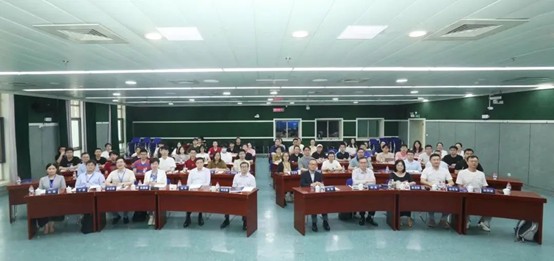
Distinguished guests in attendance included: Professor ZHANG Jun, Dean of the School of Economics, Fudan University, Director of the China Center for Economic Research, and Director of the Fudan-Ping An Center for Macroeconomic Research; Mr. LIAN Ping, Dean of the Guangkai Chief Industry Research Institute, Chief Economist, and Chairman of the China Chief Economists Forum; Mr. LU Ting, Managing Director of Nomura Securities and China Chief Economist. All guests delivered keynote speeches at the Forum.
Professor LIU Yuanchun, President of SUFE, attended the Forum and delivered an opening speech. He pointed out that the world was currently in a phase of profound transformation, and the impact of technological revolution and industrial upgrading on macroeconomic fundamentals had become a tangible reality. The traditional macroeconomic research model, based on the “troika” and Keynesianism, which relied on historical patterns to predict the future, could hardly provide effective guidance for current economic development. He emphasized that studying China’s economy urgently required breaking free from the constraints of traditional paradigms: On one hand, it was necessary to conduct in-depth analysis of the balance sheets of three major economic agents (the government, enterprises, and households), clarifying their micro-foundations and new behavioral logics; on the other hand, we must attach great importance to the “new troika”, basic research, industrial upgrading, and sci-tech finance, conduct in-depth assessments of the current progress of technological advancement and industrial upgrading, and provide forward-looking analysis of future trends. A new research landscape for macroeconomic analysis was gradually taking shape. In this process, Shanghai boasted unique advantages, particularly in areas such as industrial upgrading, basic research, the development of modern business scenarios, and international exchanges and cooperation. President LIU stated that SUFE would strive to build emerging platforms, encouraging experts and scholars to break through the limitations of traditional models and systems. By basing research on China’s realities and gaining insights into the characteristics of the global economy, SUFE aimed to make substantial progress in building an independent knowledge system, conducting macro-policy research, and advancing the development of China’s independent knowledge system.
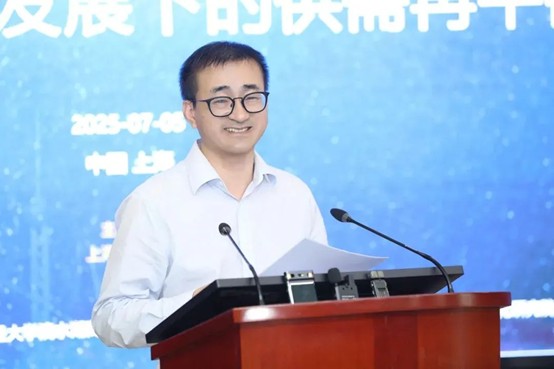
WU Huabin, Associate Professor of School of Economics of SUFE and Director of the China Macroeconomic Research Center of SUFE, delivered the 2025 Mid-year Report on the Analysis and Forecast of China’s Macroeconomic Situation (the “Report”) on behalf of his research team. The Report argued that in 2025, China’s macroeconomy had achieved stable growth amid multiple internal and external challenges, demonstrating the resilience of China’s economy, yet the contradiction of supply-demand imbalance remained prominent. Supply Side: Emerging industries such as new energy become new growth drivers, while traditional industries (e.g. coal) faced overcapacity pressures. Demand Side: Recovery momentum remained weak. The household savings rate rose, the household debt-to-income ratio stayed high, and households were burdened by both mortgage loans and consumer loans, restraining consumption potential. Profits in traditional manufacturing declined, limiting investment momentum; the in-depth adjustment of the real estate sector led to a drop in land transfer revenues, placing fiscal pressure on local governments. While overall stable, the labor market showed structural differentiation, youth unemployment remained high, and the displacement effect of artificial intelligence widened income inequality. In the real estate market, destocking pressure intensified. Restrictions on new housing sales, homogenization of small and medium-sized housing units, and demand diversion by affordable rental housing led to a continuous decline in real estate development investment. Deflationary pressures were significant, with three key indicators (Consumer Price Index (CPI), Producer Price Index (PPI), and Gross Domestic Product (GDP) deflator) all declining, posing the risk of a “debt-deflation spiral” characterized by “falling prices - increasing debt burden - shrinking demand”. Policy Recommendations from the Report: To balance short-term demand stabilization and long-term reform, the Report suggested: implementing targeted easing to alleviate debt pressures; supporting high-end manufacturing; improving the social security system to reduce precautionary savings; deepening industrial transformation to foster new growth engines; guarding against the risk of long-term stagnation marked by “low growth, high debt, and weak demand”. Additionally, the Report called for breaking market segmentation to accelerate the development of a unified national market, creating an environment for differentiated and healthy competition. This would help avoid resource waste and inefficient allocation caused by involution, actively guide market expectations, boost market confidence, and unlock consumption potential while stimulating investment vitality.
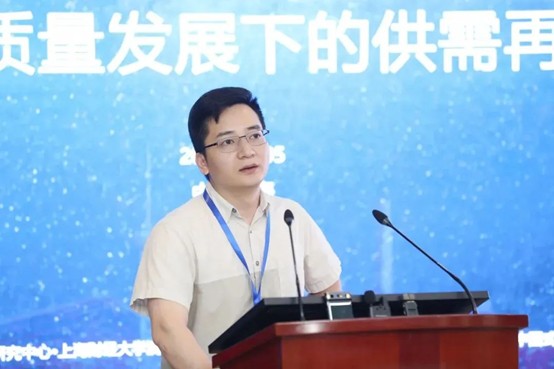
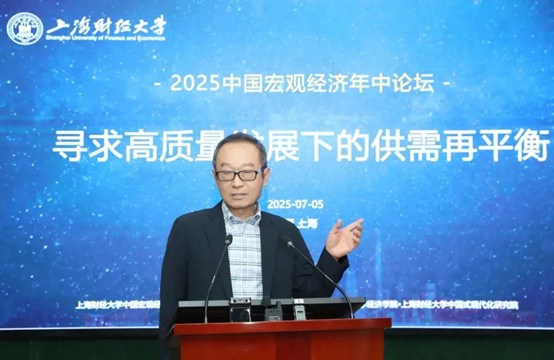
At the keynote speech session, Dean ZHANG Jun, Dean LIAN Ping, Chief Economist LU Ting, and President LIU Yuanchun delivered speeches successively.
Keynote Speech by Dean ZHANG Jun: Why Isn’t Our Demand Contraction Easing?Dean ZHANG Jun noted that during the 15th Five-year Plan period, China would face greater challenges and uncertainties, both internationally and domestically, and the tasks of advancing reform, promoting development, and maintaining stability would remain arduous. Against this backdrop, he pointed out that strategic planning must be aligned with the timeline of the great cause of building a strong country and national rejuvenation, and that China should respond to the uncertainties of the external environment with its own internal certainty. Among these strategies, steadily boosting domestic demand was not only a top priority but also a long-term solution. He emphasized that stabilizing the market, stabilizing expectations, and expanding investment were the keys to progress. To stimulate both public and private investment, the core lay in advancing the transformation of the government’s development philosophy and functions: On one hand, we should strengthen the management of local government debt, harden the soft budget constraint, promote the market-oriented transformation of financing platforms, and establish a more market-driven state-owned capital investment system; on the other hand, we should advance the building of a service-oriented government, implement the Law on the Promotion of the Private Economy, and severely crack down on practices such as “long-arm jurisdiction”. Regarding unlocking consumption potential, Dean ZHANG stated that in the long run, deepening reforms in the distribution field, especially in primary distribution and secondary distribution, was essential to ensure the steady and reasonable growth of household consumption. Specifically: First, we should reform the wage formation mechanism to drive stable growth in household disposable income: increasing wages for specific groups, guiding the reasonable growth of enterprise employees’ wages, and coordinating wage hikes with price adjustments; second, we should finalize the social security mechanism as soon as possible to address households’ worries: establishing a unified national basic social security system, improving the housing security system, and enhancing the precision of fiscal transfer payments in supporting disadvantaged groups. In closing, he stressed that while the main contradictions in current economic operations and policy priorities were more focused on the demand side, supply-side issues must not be neglected. Continuing to advance supply-side structural reform and improve supply quality was also an inherent part of promoting demand-side reform and synergistically smoothing the national economic cycle.
Keynote Speech by Dean LIAN Ping: Certainties and Uncertainties of the Global Economy in the Second Half of 2025. Dean LIAN Ping argued that in the second half of 2025, the external environment would be a complex interplay of certainties and uncertainties, factors that may affect global capital flows, exchange rate fluctuations, and foreign trade patterns, bringing structural opportunities and challenges to China’s economy from multiple dimensions. He noted that various “gray rhino” and “black swan” events would continue to intersect and overlap in the second half of 2025, which could be summarized as “three certainties” and “three uncertainties”. The “Three Certainties”: 1. Significantly greater pressure on global economic recovery: Affected by escalating trade wars and geopolitical conflicts, the path and direction of the global recovery remained unclear; 2. Tariffs driving a rebound in U.S. inflation: Due to supply-side shocks from trade wars, U.S. inflation showed a “first decline, then rise” trend in the first half of 2025. While inflation remained elevated in the UK and Japan, the EU had seen a faster decline in inflation thanks to earlier monetary policy adjustments. In the second half of 2025, pressure for a U.S. inflation rebound would persist, with additional import tariffs being the most important and direct driver; 3. Multiple factors pushing the U.S. dollar to further weaken: The U.S. Dollar Index exhibited a “first rise, then fall, and fluctuating downward” pattern in the first half of 2025. The U.S. was currently facing the challenge of “four overlapping phases”, which fundamentally drove the U.S. dollar’s weakness. Moreover, the controversial domestic and foreign policies introduced to achieve the “America First” goal have further eroded the U.S. dollar’s credibility. The “Three Uncertainties”: 1. Uncertainty over reciprocal tariff negotiations: The direction of the rapidly deteriorating global trade environment remained unclear; 2. Uncertainty over when the Federal Reserve (Fed) would restart rate cuts: The Fed faced a “dilemma” in cutting rates, as it needed to balance between preventing recession and curbing inflation; 3. Uncertainty over the prospect of multi-point resonance of geopolitical risks: The outlook for overlapping geopolitical risks remained unpredictable. Looking ahead, Dean LIAN Ping stated that as long as China adhered to the principle of “focusing on our own development”, strengthend its strategic resolve, and leveraged its strong economic resilience, high-level opening-up strategy, sufficient fiscal and monetary policy space, and sustained innovation momentum, coupled with diversified export markets, targeted and forceful policy measures would enable China to maintain a sound momentum of “stability with progress” amid the complex external environment.
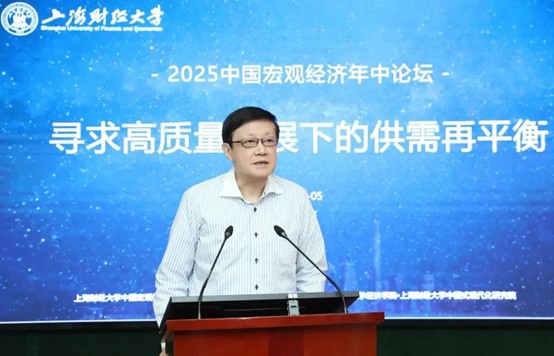
Keynote Speech by Chief Economist LU Ting: Multiple Challenges and Policy Opportunities for Stable Growth in the Second Half of 2025. Chief Economist LU Ting argued that China’s economy performed generally well in the first half of 2025, but pressure for growth slowdown would increase significantly in the second half of 2025, along with mounting deflation risks. As China’s macroeconomy navigated multiple internal and external challenges, policies needed to be reinvigorated and reforms in key areas advanced. He analyzed the main challenges as follows: 1. Grim export outlook in the second half of 2025: Affected by factors such as overdrafts from supplementary exports, rising tariffs, and blocked loopholes in re-exports, export growth was likely to be lower than that in the first half of 2025; 2. Unfinished real estate deleveraging and inventory clearance: Sales in first- and second-tier cities had declined markedly, yet the real estate sector still comprised a large share of the national economy. Its downturn would exert significant downward pressure on China’s economy and interact with the slowdown in export growth; 3. Potential decline in investment and production: Intensified efforts to address overcapacity in certain industries in the second half of 2025 may lead to a notable drop in investment and production. Meanwhile, insufficient follow-up consumption momentum from the “trade-in” policy could cause declines in sales volume and investment. Additionally, from a price perspective, deflationary pressures would persist in the second half of 2025, with even more pronounced downward pressure on CPI and PPI. Chief Economist LU Ting focused his analysis on export and commercial housing sales trends since 1999, and suggested that a multi-pronged policy approach was needed to address current challenges: In the real estate sector: Leveraging the current pressure to resolve historical issues such as accumulated debt in the real estate industry, advancing initiatives including ensuring the delivery of pre-sold housing and facilitating the bankruptcy and clearance of unviable enterprises, and rebuilding market order and trust; in consumption: Promoting social security reforms, increasing pensions for elderly residents in both urban and rural areas, and gradually including 300 million migrant workers in the corporate social security system; driving demand through supply-side reforms, as China still faced insufficient supply in certain areas; in fiscal policy: Fiscal reforms over the next two to three years would be crucial to alleviate the fiscal pressure on local governments. In summary, Chief Economist LU Ting noted that while China’s economy would face significant pressure in the second half of 2025, there were also ample opportunities. Seizing these opportunities was expected to help stabilize the economy and pave the way for recovery.
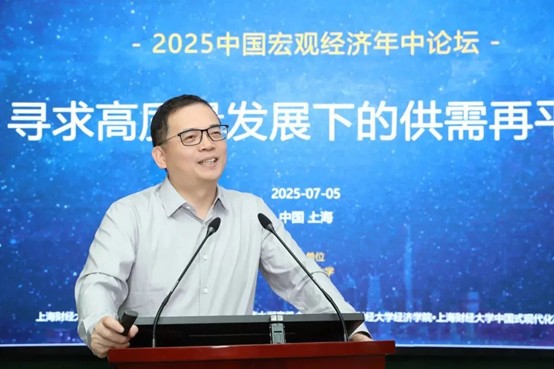
Keynote Speech by President LIU Yuanchun: Coordinating Macroeconomic Regulation and Micro-governance - Consolidating the Micro-foundations for High-quality Development. President LIU Yuanchun proposed that macroeconomic governance should add a new dimension of “coordinating macroeconomic regulation and micro-governance” to the existing “Five Co-ordinations”, with governing “involutionary” competition as a key policy focus, thereby consolidating the micro-foundations for high-quality development. He emphasized that the primary concern in current macroeconomics was the persistently low price level. The causes of this low price level, which deviated from the trend, were diverse: in addition to structural issues on the demand side (e.g. declining real estate investment), supply-side shocks played a more critical and complex role. On one hand, China was experiencing a “benign” supply shock driven by technological progress and economies of scale. Over the past decade, China’s overall labor productivity had increased by nearly 90%, and the costs of the “Three New Products” (new energy vehicles, lithium batteries, and solar cells) had dropped significantly, embodying new production models. On the other hand, while many industries advanced technological upgrades, their financial indicators had deteriorated, with corporate profit margins even falling to historical lows. He argued that this should be attributed to vicious competition caused by the “involutionary pricing model”. If price declines were mainly driven by technological progress, corporate profits should improve. However, the current phenomenon in the industrial sector - “costs are falling, but profits are falling even faster” was widespread. To address this dilemma and resolve the issues of low prices and “involution”, President LIU stressed the need to fully launch micro-governance. He suggested that the policy approach should shift from the previous model relying mainly on industry self-regulation to a new model of “government leadership, industry coordination, and enterprise implementation”, placing competition policy at the forefront. Citing the National Industrial Recovery Act during the New Deal era under U.S. President Franklin D. Roosevelt, he proposed that in critical periods, legislation and government guidance should be used to regulate reckless competition and reshape market order. In the face of micro-level disorders caused by China’s long-standing prioritization of industrial policy over competition policy, President LIU emphasized the need to reposition industrial policy and strengthen competition, forming a new pattern where macroeconomic regulation and micro-governance worked in synergy.
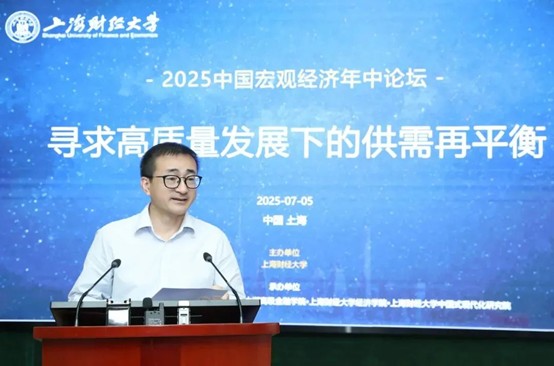
The Forum attracted wide attention, with the live streaming on SUFE’s official WeChat Channels drawing over 10,000 online viewers who participated in interactions. Hosted by SUFE, the Forum was co-organized by China Macroeconomic Research Center of SUFE; Dishui Lake Advanced Finance Institute, Shanghai University of Finance and Economics (SUFE-DAFI); School of Economics of SUFE; and Institute of Chinese Modernization of SUFE.
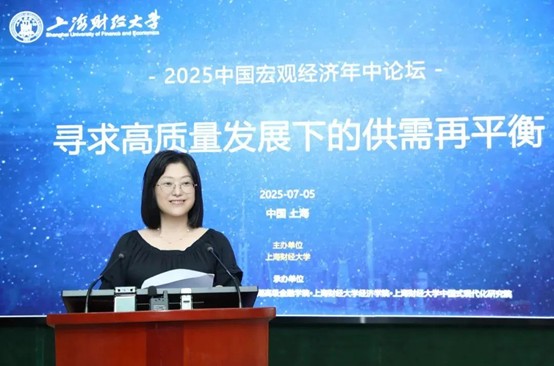
The Forum was hosted by Professor CHEN Xuanjuan, Executive Dean of SUFE-DAFI.