



In response to China’s "Going Global" strategy and to support Chinese enterprises in solving the bottleneck of overseas talents, the Conference on Building High-End Talents for Chinese Enterprises Going Global was held on June 26, 2025. A series of talent training-related public lectures that focused on enterprise globalization and strategies for going global were launched, where academic authorities, industry experts, and practical leaders were invited to conduct in-depth discussion on core topics such as policy trends, compliance management, human resources, and regional markets.
In the sub-forum held in the afternoon, the public lecture “Breakthrough Camp for Enterprises Going Global” launched by Dishui Lake Advanced Finance Institute, Shanghai University of Finance and Economics (SUFE-DAFI) attracted over 300 enterprise managers. Focusing on four themes including compliance, talent, brand and supply chain, the public lecture offered enterprises “practical tools + decision-making models” based on intensive knowledge sharing and case analysis, thus assisting enterprises in building key execution capabilities for going global and mastering decision-making recipes, and achieve global benefits with minimal cost trial and error.
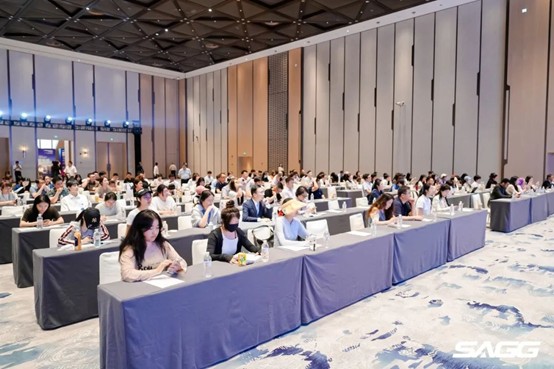
This sub-forum was presided over by QIAN Guoxin, President of VHR.
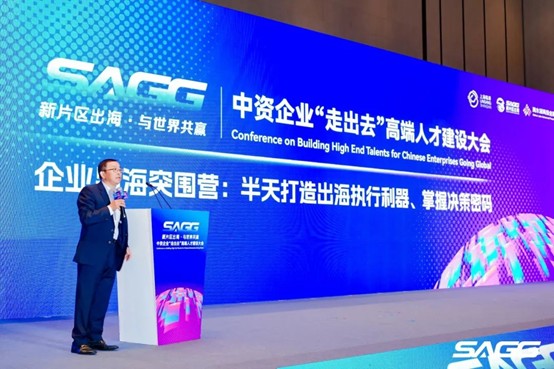
MA Xiaoyun, a Partner of King & Wood Mallesons, delivered a speech themed “Path to Compliance”, offering the survival rules for enterprises from “falling in traps” to “avoiding risks”. She pointed out that with the deepening of globalization, Chinese enterprises were confronted with multiple challenges in cross-border operation, e.g. geopolitical friction, tightened cross-border regulation, and rise in tariff barriers; for example, the security reviews by multiple countries after the releasing of the US CFIUS Act became stricter, resulting in decline in cross-border mergers and acquisitions; and trade protectionism resulted in sharp increase in tariff costs, driving enterprises to shift to greenfield investments.
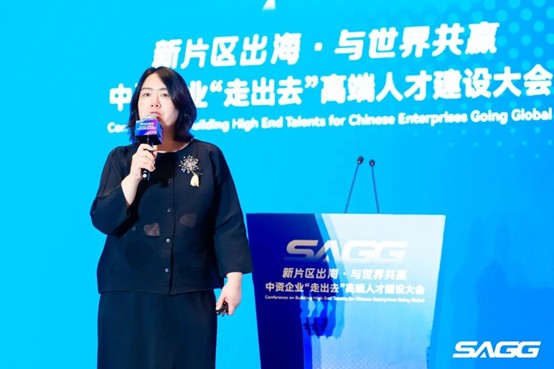
Ms. MA stated that when conducting layout in Southeast Asia, Mexico, etc., enterprises should give consideration to industrial chains, costs, and policies, and that full-cycle compliance management was crucial, which should run through all phases including legal due diligence, financial modeling, rules of origin, approval qualification, trade compliance, and data compliance. In addition, she suggested that enterprises conduct proactive risk assessments, adopt the “China Plus One” strategy, and build a full-chain compliance management system, so as to achieve compliance-based and strategy-guided sustainable overseas development.
In his speech themed “Talent Decoding”, LIU Dagang, Asia Pacific Senior Partner of X-GIANTS International, analyzed the challenges and solutions of enterprises going global in recruiting overseas talents, and pointed out that in 2025, with the deepening of globalization and the progress of Chinese enterprises in going global, China’s non-financial overseas direct investment (ODI) was expected to approach the peak of 2016. Against this background, micro-, small and medium sized enterprises would face major challenges in their large-scale overseas expansion generally, e.g. “shortage of international management talents, professional talents and technical talents, and lack of understanding of local policies”; therefore, hasty overseas layout would easily lead to compliance risks and cultural conflicts.
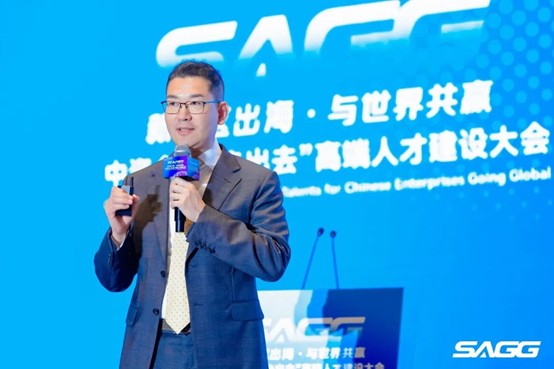
Mr. LIU stated that when going global, enterprises generally went through four stages, i.e. international business department, overseas office, multi-country operation, and global operation, so enterprises going global should set talent strategies matching the characteristics of each stage. Through the “6-dimension” framework, combined with flexible employment mechanisms and compliance control means, enterprises could enhance their capability to respond to complex human resource environments, especially, they should guard against hidden costs caused by cross-cultural conflicts.
Mr. LIU emphasized that an enterprise’s international talent strategy should be led by CEO of the enterprise, with integrating talent planning into the overall strategic blueprint of the enterprise. Enterprises could break down geographical barriers by applying data tools, so as to achieve the key leap from “going global” to “taking root in global market”.
In her speech themed “Brand Reconstruction”, ZHANG Lu, Head of CXM, Merkle Marketing Platform and E-commerce at Dentsu China, discussed and explored the balance between global brand consistency and localization, and pointed out that Chinese enterprises’ overseas marketing had gradually shifted to current refined operation-oriented growth model from previous extensive investment and that enterprises should establish the three-in-one strategic layout of “global brand building, omni-channel customer acquisition, and precise conversion” through digital marketing. Ms. ZHANG emphasized that in terms of brand positioning, enterprises should focus on core values while highly adapting to local cultures of the overseas markets; for example, a 3C brand set differentiated selling points for different regional markets to improve the effectiveness of its market reach.
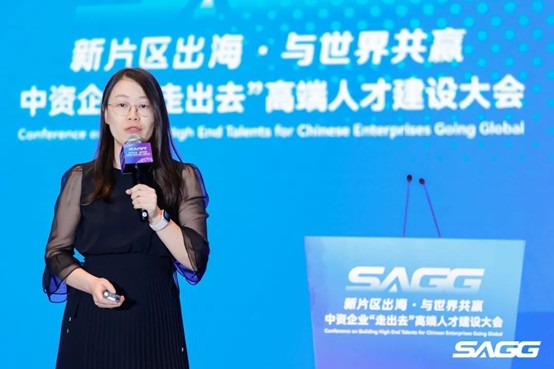
Ms. ZHANG further pointed that enterprises should integrate data from various touchpoints (e.g. official website and social media) through a data middle platform, and cover the entire customer lifecycle by virtue of marketing automation, so as to address the practical challenges including shortened consumer attention, and data silo. On this basis, enterprises should properly use third-party platforms and arrange self-built e-commerce platform, so as to realize the transformation to strategic growth from instrumental marketing, and to facilitate brand globalization to move to the stage of “value cultivation” from “customer traffic competition”.
In her speech themed “Supply Chain Resilience”, SUN Junlu, Director of Supply Chain and International Trade of KPMG China, provided an in-depth analysis of risk response and solutions to overcome adversities for enterprises in the era of China-US Trade War 2.0, and pointed out that the core of the current China-US trade friction had shifted to non-tariff barriers represented by export controls from tariff-related disputes. Due to that the US imposed additional Section 301 tariffs and Fentanyl-related tariffs on Chinese products, the tariff rates on some goods had risen to 100% from 45%; meanwhile, with the continuous tightening of export control policies, enterprises going global faced the challenges including difficulties in applying for licenses and higher customs inspection rates.
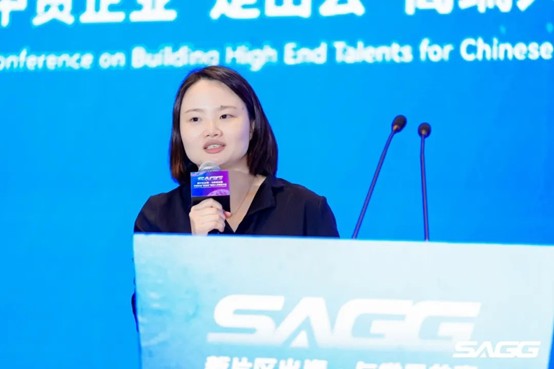
In response, Ms. SUN suggested that in the short term, enterprises should optimize their costs in the short term by adopting the “first sale” framework and the strategy of non-taxable price stripping, and in the medium and long term, they should facilitate the relocation of their supply chains and explore diversified layout in Central Asia, Eastern Europe and other regions, so as to enhance their anti-risk capability.
Especially, Ms. SUN reminded that enterprises should be highly vigilant of compliance blind spots such as “transshipment labeling” so as to avoid secondary risks caused by improper operation. It’s crucial to build a systematic compliance management system and a supply chain strategy that was capable of dynamic adjustment for an enterprise to achieve a way out in the new round of global competition.
Finally, CHU Yile, Director of the Strategic Cooperation Department of SUFE-DAFI, made a conclusive speech, in which she stated that the Conference begun with the suggestion that enterprises should take “compliance as base of overseas operation, talent as core driving force, brand as important asset, and supply chain as a solid guarantee”, and emphasized that they should facilitate their collaborative overseas expansion from multiple dimensions so as to achieve systematic and strategic layout.
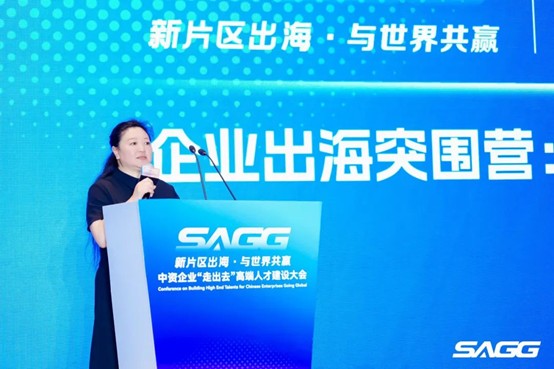
Ms. CHU introduced that enterprises could participate in the overseas operation-related public lectures and courses offered during the Conference, and that SUFE-DAFI would continue to integrate the training resources and provide a series of supporting services based on enterprises’ demand. In addition, Ms. CHU expressed gratitude to the Going Global Comprehensive Service Platform of Lingang Special Area for its strong support and to all guests for their brilliant sharing.
In the future, SUFE-DAFI is looking forward to working together with all relevant parties to support more Chinese enterprises to make success in the international market.