


SUFE-DAFI
In May 2025, the Module 5 (the “Module”) of “Global Leadership Program in New Finance (Phase II)” (the “Program”) of Dishui Lake Advanced Finance Institute, Shanghai University of Finance and Economics (“SUFE-DAFI” or the “Institute”) successfullykicked off in Anhui Province. Built around the theme “Management Advancement in the Digital and Intelligent Era and the New Globalization Landscape”, this mobile workshop fostered multi-faceted discussions on digital management innovation, psychological capital development, and new globalization landscape, broadening participants’ intellectual horizons and sharpening their practical acumen.
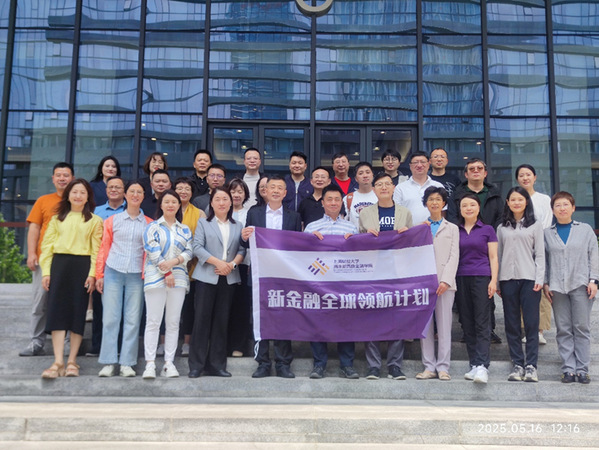
The Module blended corporate site visits, academic lectures, alumni networking, and industry tours into a cohesive learning experience, balancing in-depth content with real-world engagement.
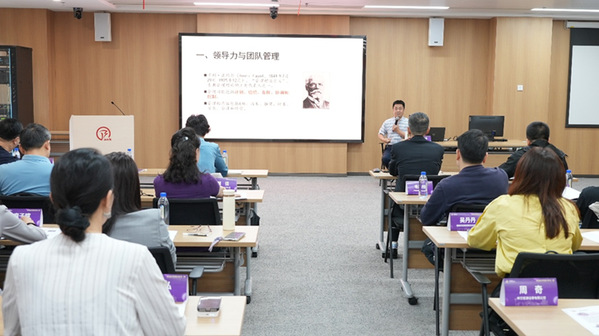
Professor YI Lingfeng, Professor and Doctoral Supervisor at the School of Economics and Management, East China Normal University, led a keynote course titled Developing Managers’ Psychological Capital and Enhancing Their Leadership. Through two sessions i.e. “Leadership and New-generation Employees Management” and “Stress Management, Psychological Capital Development, and a Positive Mindset”, Professor YI delved into how managers could enhance their leadership by developing psychological capital, equipping participants with actionable strategies for leadership growth.
He emphasized that smiles, humor, and a growth mindset were critical soft skills for emerging managers. Using case studies and empirical data, Professor YI highlighted the toll of stress on physical and mental health, and shared techniques like cognitive reframing, emotional labor management, and gratitude cultivation, helping participants build a more resilient and effective leadership style.
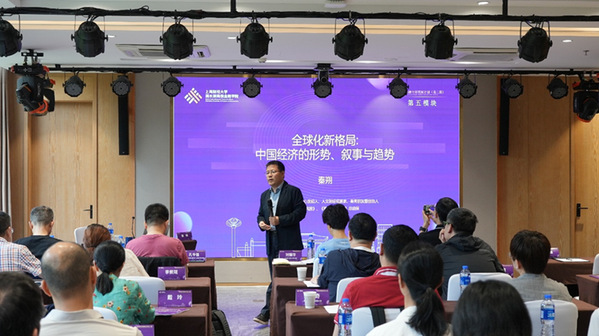
Mr. QIN Shuo, Founder of the China Business Civilization Research Center, a Humanistic Finance Observer, and Creator of the public WeChat column Qin Shuo’s Moments, gave a talk titled The New Globalization Landscape: China’s Economic Context, Narrative, and Trends. Drawing on his deep financial insights and hands-on experience, he broke down China’s economic context, narrative, and trends amid today’s new globalization landscape, helping participants better grasp economic dynamics and seize development opportunities.
He noted that while China faced challenges like sluggish growth momentum and China-U.S. trade frictions, it retained a solid manufacturing base and growing innovation capabilities. Mr. QIN stressed the need for China to stay innovation-driven to advance high-quality development, while mitigating local debt risks and optimizing resource allocation. He also urged China to leverage new globalization opportunities, strengthen international cooperation, and elevate brand influence to achieve sustained, healthy economic growth.
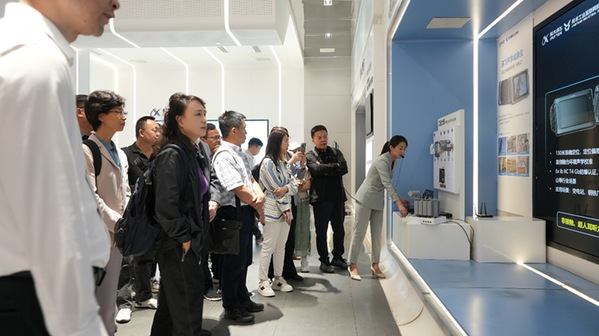
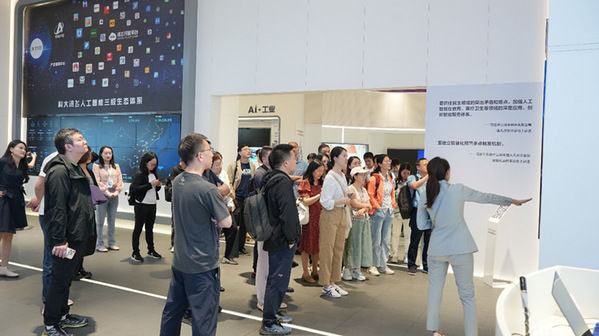
During the Module, participants visited the Hefei headquarters of iFlytek, a leading tech benchmark enterprise. Mr. RAO Yaoquan, Vice President of iFlytek’s Spark Enterprise Group, Deputy General Manager of its Financial Business Unit, and Executive Director of its AI Innovation Lab, showcased the company’s latest breakthroughs in large model technology and how these innovations were redefining the new quality productive forces powering digital finance.
He explained that to date, the iFlytek Spark Large Model had boasted six core capabilities, including text generation and language comprehension, with major progress in complex problem reasoning, mathematical computing, multimodal interaction, and real-time speech translation. It also forged deep partnerships in finance, education, and healthcare. Amid intensifying China-U.S. technological competition, iFlytek remained committed to independent domestic development, advancing self-reliant and controllable large model technology.
This visit not only deepened participants’ understanding of cutting-edge technology but also sparked deeper reflections on the integration of “digital & intelligent + finance”.
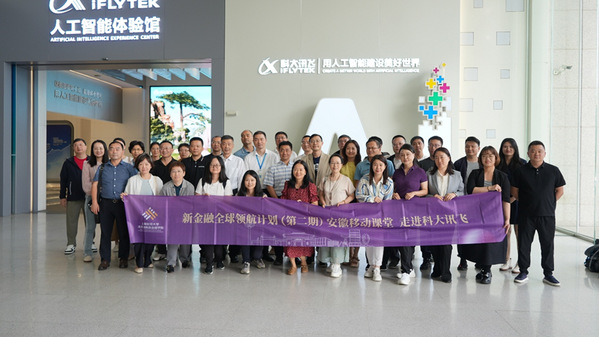
During the mobile workshop, participants of the Program held in-depth exchanges with members of SUFE’s Anhui Alumni Chapter for the first time, using the course to empower alumni growth. Alumni noted that returning to this “classroom" reawakened both their emotions and intellectual curiosity, and praised SUFE-DAFI’s systematic curriculum and cross-regional networking mechanism as a source of ongoing growth for local alumni.
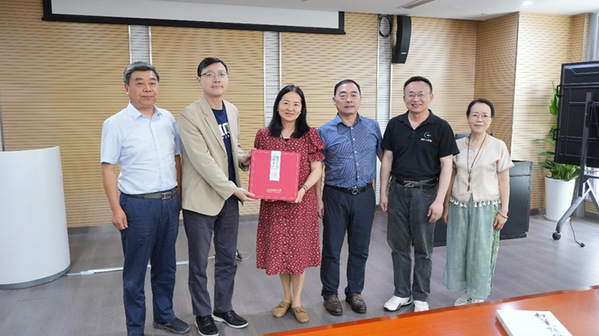
Mr. CHEN Faxiang, Vice President of SUFE’s Anhui Alumni Chapter, presented books on Anhui culture (authored by himself) on behalf of the Chapter, and gave a brief overview of Anhui’s industrial layout and development. WANG Wei, Director of SUFE-DAFI’s Executive Education (EE) Center, thanked Huishang Bank, iFlytek, and the Anhui Alumni Chapter for their support. The on-site visit gave participants a vivid sense of Anhui’s industrial setup and economic development model, boosting their confidence in Anhui’s prospects while forging stronger emotional bond and paving the way for future collaboration.
The Program included six modules: “Macroeconomics and New Development Pattern”, “ESG: Global Development and Chinese Practice”, “Pioneering Industries and Cutting-edge Sci-tech Innovation”, “Artificial Intelligence and Its Applications in Finance”, “Management Innovation and Leadership Advancement in the Digital and Intelligent Era”, and “High-quality Development, Financial Powerhouse, and the ‘Five Key Areas of Finance’”. Spanning macro strategy to micro-level practice, and theoretical exploration to hands-on exercises, these modules fully covered the latest development trends and cutting-edge advancements in new finance and emerging industries.
Stay tuned for the next module!
About EE
SUFE-DAFI’s Executive Education (EE) leverages the Institute’s premium resources in financial research and education, integrating global educational assets to design customized training programs for enterprises. It also offers public finance and management courses for mid-to-senior executives, nurturing high-caliber financial and economic talents and leaders across sectors to fuel economic development and industrial upgrading. The program strives to bridge advanced international theories with Chinese practice, creating a most valuable lifelong learning platform for emerging finance.