



#
Editor’s Note
Both the world of finance and the market trend change quickly. In this season that witnesses the start of youth, by showcasing these young people’s vivid stories in Dishui Lake Advanced Finance Institute (DAFI) located by the Dishui Lake, we hope to record how they lay a solid foundation with their professionalism and forge ahead relentlessly on their journey toward the future with their belief. Some of them overcome obstacles in data modeling, some explore in the field, and others practice in the changing financial market. Although their stories are different, they share the same value: proactivity, perseverance, and the integration of knowledge and action.
Today, let’s turn our attention to JIN Yan, a new policy-based finance professional who comes from Northwest China, and then resolutely returns to his hometown. Through his educational experience, career choices and professional belief, he has interpreted how to “integrate personal development into the long-term blueprint of his hometown”.
Profile
JIN Yan is a graduate of the first full-time Master of Finance (Financial Analyst Track) program at DAFI, majoring in. During his studies, he was awarded the Third Prize in the "China Financial Futures Exchange (CFFEX) Cup" Financial Knowledge Competition, and twice awarded the Second-class Postgraduate Scholarship. Currently, he has obtained an offer from the Gansu Branch of China Development Bank.
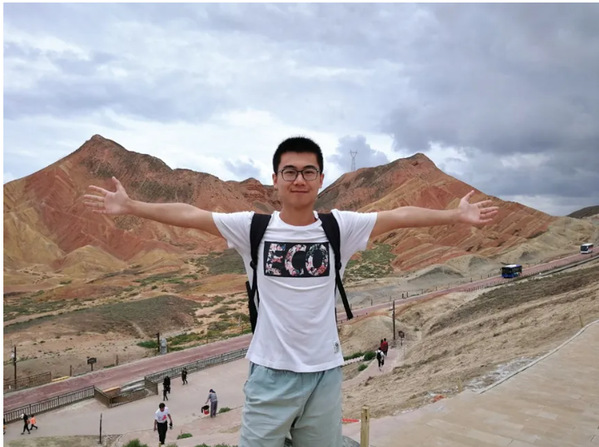
Starting from Gansu Province, I Moved Toward the "Center" Step by Step
01
I was born in Gansu Province, and grew up between the Loess Plateau and the Qilian Mountains, so I was naturally familiar with the seasonal rhythms, local customs and practices of the region. Perhaps for this reason, I had a desire to “go out” to see farther places and to experience different educational systems, industry environments, and life styles.
I spent my phase of undergraduate in Beijing, where I laid the foundation for economics in the academic atmosphere there and truly understood the linkage between policies and economy for the first time. As I became more interested in finance, I started my postgraduate life at Dishui Lake Advanced Finance Institute, Shanghai University of Finance and Economics (DAFI-SUFE). As one of the first batch of postgraduates of DAFI-SUFE, I was well aware of the mission behind this new institute, i.e. to cultivate interdisciplinary talents who truly understand China’s financial context and industrial reality, as well as global trends in the most cutting-edge financial reform zone.
Therefore, it can be said that over the past years, I have experienced a migration from the Northwest to Beijing, and then to Shanghai. My choices have expanded my horizons and deepened my understanding of my major. However, during the process of getting closer to the "center", I began to reflect to which region my abilities could bring the most meaningful value? The field of transformation I truly wanted to participate in may not be in the most advanced cities, but in the places that most require my construction.
Not Going Back, But Returning
– My Logic for Choosing the Region Where I Work
02
To be honest, I didn’t plan to return to the westernChina region at the very beginning. I was well aware that the eastern China region, especially the Yangtze River Delta, has undeniable advantages in terms of financial talent concentration and the diversity of employment platforms. Like many of my classmates, I targeted the positions at major banks, securities firms, and research institutions during the autumn recruitment season initially.
But gradually, I have realized a reality that even the “financial center” didn’t mean a “strong sense of fit”. Some positions that seemed glamorous meant extremely high turnover rates, repetitive work, and fierce competition; some job duties failed conformed to my personalities – I preferred systematic analysis, paid attention to long-term benefits, and attached importance to policy context.
Meanwhile, I began to pay attention to the development and changes in my hometown. After learning more about Gansu Province, I was surprised to discover that policy-based finance played a crucial role there, specifically, the Phase II expansion of Lanzhou Zhongchuan International Airport, the construction of the new energy equipment manufacturing bases, as well as the optimization and upgrading of the industrial structure of rural areas relied on the long-term support of policy funds. Thus, I realized that if I could participate in this process, and it would not be more than a job, but contribution to the region.
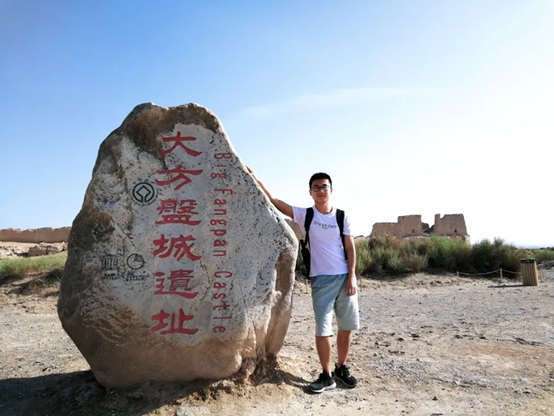
China Development Bank (CDB) exactly provided me with such a platform, since it connected the will of the country and local practice and featured high degree of policy alignment, in-depth project engagement, and high density of financial technology. What’s more, I used to be financed by a student origin-based loan from CDB when I was an undergraduate, and thus I always had a warm memory of CDB. So I thought maybe I could “renew the relationship” between I and CDB this time.
Key Words from Preparation to Offer:
Systematic Thinking, and Local Insight
03
The entire job hunting process at CDB lasted two months, including resume submission, written examination, and interview. As a policy-based bank, CDB examined not only professional skills and English ability, but also policy-related subjective questions during the written examination. Compared with ordinary banks, the difficulty and focus of CDB’s examination were more oriented toward testing structural thinking and expression ability.
I did a lot of preparations, especially in English and argumentative writing, and I accumulated a lot of knowledge about the policies, financial development, and project implementation in Gansu Province. CDB’s interview focused more on expression ability, psychological quality and logical reasoning ability. During mock interviews, I kept practicing how to demonstrate my abilities through project cases and I never fell into rigid response templates.
What made me stand out finally? Firstly, I had a systematic understanding of financial theories, and I demonstrated it in my answers; secondly, I conducted in-depth research on local characteristic projects in Gansu Province, so I showed strong “local insight”. I did not evade the question of "why choose to return to the western China", but explained actively how I derived my choice through the logic of “career planning + regional identity”.
In Real Western China Practice, Finance Is No Longer Abstract
04
During my time at DAFI, we often discussed the functional positioning of different financial institutions in class and used to visit many financial institutions. Therefore, I had a clearer understanding of the differences between policy-based banks and commercial banks.
If commercial banks emphasized efficiency, marketing, and profit goals, policy-based banks were more like a bridge connecting national strategies and capital. Policy-based banks didn’t focus on "how to accelerate capital flow", but "how to make capital serve development more accurately". Compared with commercial banks, policy-based banks that emphasized long-term support for national goals and the effective integration with financial tools may work more slowly, but they were more solid.
Many people held the rigid impression that the financial ecosystem in western China was “limited in platforms” and “simplistic in paths”, but the actual work in western China was richer and more complex. Let’s take the Gansu Branch of CDB as an example: the Gansu Branch was not only engaged in the businesses related to traditional infrastructure and livelihood projects, but also deeply engaged in key sectors such as green finance, new energy, and rural revitalization.
For example, under the background of the "dual carbon" goals, the Gansu Branch has provided financing support for multiple photovoltaic power generation projects and waste incineration power plants; in terms of livelihood projects, the Department I would serve at the Gansu Branch has participated in relevant education, medical care, and environmental protection projects. So, when I’m engaged in finance in CDB, I must master the ability to integrate policies, project management, and financial tools.
I was grateful that I could be engaged in such long-chain businesses of high complexity at the start of my career, and it also further strengthened my original aspiration to take root in local areas and serve the local development.
Starting from DAFI, and Running into Future
05
After two years of intensive training at DAFI, I have not only obtained hard skills in financial analysis, but also, more importantly, shaped my way of viewing problems.
DAFI’s curriculum system emphasized the integration of theory, tools and practice, which included not only technical courses such as financial modeling and valuation analysis, but also vision-oriented courses such as policy design and industrial research. Thanks to support of the dual-mentorship system and the Career Development Center, I never felt alone throughout the job hunting process.
I still remembered that after a mock interview, Mr. MAI from the Career Development Center told me: "You expressed yourself well in the interview, but more importantly, do you believe that you truly want this job?" From his suggestion, I rethought the meaning of my choice and presented myself more sincerely in later interviews.
Now, I am about to start my career as a new policy-based finance professional. From the Loess Plateau to Beijing, from the shores of Dishui Lake to my hometown, I have completed a cycle, but I’m aware that my future has just begun.
I am looking forward to setting out on a path where I can accumulate experience steadily. Here, slowness is not only a choice, but also represents strength. In my opinion, career growth means thorough deduction of every plan, in-depth understanding of every project, and clear and specific recording of every meeting minutes.
Tips:
CDB’s written examination is featured by strong structural focus, and English and subjective questions are key to distinguishing candidates, so it’s recommended to pay more attention to logic and expression;
There are more policy-related projects in western China (such as Gansu Province), and thus it’s crucial to comprehend the industrial distribution and the "14th Five-year Plan" development planning in the region in advance;
During interviews, it’s more effective to demonstrate the logical closed loop of “understanding on policies + professional transfer ability” than “rigid experience”;
DAFI has rich resources in curriculums, mentors, and the Career Development Center, and it’s recommended to actively leverage these resources during job hunting to avoid detours.
Message:
Please reasonably plan your path, continuously improve your abilities, find anchors in changes, and act actively in uncertainties.