



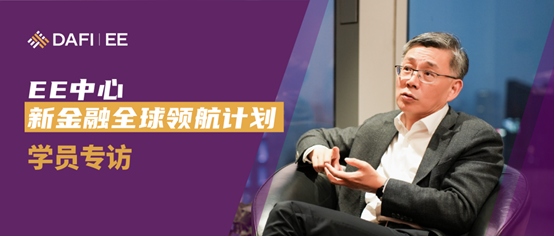
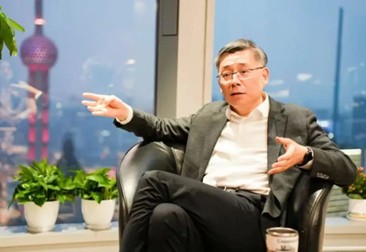
In his high-rise office in the ICBC Tower in Lujiazui, ZHANG Xiaoqi, Vice President of Shanghai Branch of Industrial and Commercial Bank of China (ICBC), is gazing out at the urban skyline where the Huangpu River meets the three highest buildings at Lujiazui (Shanghai Tower, the Shanghai World Financial Center, and Jin Mao Tower).
ZHANG Xiaoqi, a senior banker who graduated as an undergraduate from Shanghai University of Finance and Economics (SUFE), has returned to his alma mater years later as a “student” once again. During his 34-year banking career, he witnessed the fast growth and transformation of China’s banking industry, and participated in multiple innovations and reforms of Shanghai Branch of ICBC. Today, as a participant in the Global Leadership Program in New Finance (Phase II) (the “Program”) at Dishui Lake Advanced Finance Institute, Shanghai University of Finance and Economics (“SUFE-DAFI” or the “Institute”), he has been engaged in another in-depth practice of transformation.
Mr. ZHANG is slim and light-footed and enjoys doing sports. During his studies under the Program, he usually took the initiative to coordinate resources and put forward suggestions.
“SUFE-DAFI was established in response to the times and has pioneered education innovation,” Mr. ZHANG said straightforward when talking about his motivation for enrolling in the Program. He believed that only by constantly refreshing the boundaries of our awareness could traditional finance be injected with continuous vitality in the era of new quality productive force.
ZHANG Xiaoqi
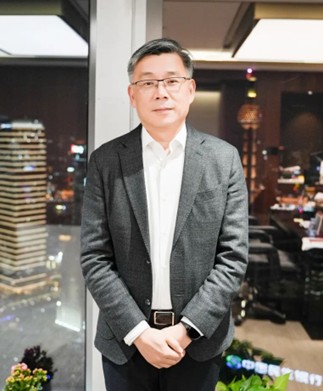
Mr. ZHANG is a participant of the Program, Vice President of Shanghai Branch of ICBC, former General Manager of the Settlement & Cash Management Department, the International Business Department, the Corporate Banking Department, and the Investment Banking Department of Shanghai Branch of ICBC
1
An “Observer” and “Practitioner” in 34 Years of Financial Evolution
“Since I joined the banking industry in 1991, I have experienced several key stages of China’s economic development,” Mr. ZHANG said. What he described was not just the expansion of the banking business, but a true follow-up of the transformation path of China’s real economy. In the context of the times, during his banking career, he implemented national strategies, from serving traditional heavy industries such as iron, steel and chemicals, to participating in financing for infrastructure projects like highways and railways, and then to the rise of the real estate industry and the layout of the sci-tech innovation sector, so his banking experience aligned with the timeline of China’s macroeconomic development.
Today, he shifted his focus to “new quality productive forces” and he said, "Banks cannot always rely on large-scale infrastructure or real estate. The central government has put forward the concept of new quality productive forces. If you are considering which industry you will be engaged in over the next decade, it will be emerging industry."
In his opinion, upon each shift in economic model, the finance must undergo “responsive restructuring”, which was not just a strategy, but also responsibility. With such acute insight into the economic trends, he had in-depth thoughts on the digital transformation of the banking industry and particularly concerned about the development of the sci-tech innovation sector. Currently, with leading loan scale to technology-based enterprises, Shanghai Branch of ICBC is the leader among the four biggest state-owned banks in Shanghai.
“The new generation of bankers must be more versatile, who shall comprehend the industries from traditional industries to the sci-tech innovation economy and shall be familiar with the shift from asset-driven development to technology-driven development. Meanwhile, the core connotation of banking services is also being redefined, since we must know financial models, grasp technology trends, uphold political awareness and keep people in mind. This is also the new definition of a banker’s role,” Mr. ZHANG stated.
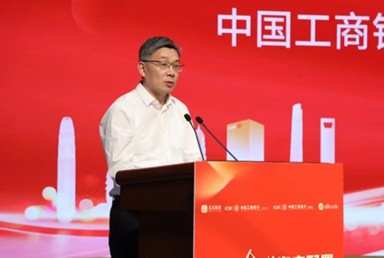
Under his leadership and with the efforts of his team, Shanghai Branch of ICBC attempted to build an integrated “bank-enterprise-research” platform with universities and sci-tech parks, and established an exclusive approval channel for technology loans, thus accelerating the early financing efficiency of the projects. “Banks are not investment institutions, but they must learn to identify the future like investors,” Mr. ZHANG said.
2
“The Clash of Thought Means the Starting Point of Innovation”
According to Mr. ZHANG, under different historical contexts, when responding to national strategic needs, a bank, whether it is a state-owned commercial bank or joint-stock bank, shall not act in a rigid manner in its understanding of innovation, cultivation of capabilities, and improvement of professionalism.
However, the Program of SUFE-DAFI provided an opportunity to break down the barriers and embrace different thinking. What he appreciates was not just the knowledge update, but also the in-depth interaction among the classmates from securities firms, insurance companies and the city commercial banks, who were often engaged in business dialogues and ideological exchanges in and out of class.
“We sat next to each other. I was from ICBC and he worked for China Guangfa Bank. Although we’re both in banking, we were entirely different," Mr. ZHANG said, "Sometimes, from a short conversation between us, I may have lots of new insights into institutional incentives and risk control."
In his view, innovation did not come out of nothing, but was a natural result of crossover collisions. Just like the institutional advantages and industrial agglomeration of Lingang Special Area, which provided a natural foundation for financial innovation, as such "organic environment" was the key for updating and iteration of financial institutions.
“SUFE-DAFI’s courses are closely linked to reality, with in-depth and extensive module design. From AI to ESG, from financial engineering to leadership development, each module has triggered new thoughts in me,” Mr. ZHANG said, “It is not just a supplemental course, but a complete ‘refreshing’.”
Mr. ZHANG particularly valued the "application-oriented" atmosphere of the Program. “The Program never piles up theories; instead, it repeatedly breaks down technology, management, and strategy in real-life scenarios, representing a structured restart for those of us who have worked for decades.”
3
A Senior Banker’s Practical Promotion of AI Finance
Mr. ZHANG has been paying attention to AI for a long time. He used to conduct in-depth research at a GPU design company, and the two-and-a-half-hour conversation strengthened his confidence in "new quality productive forces" more than any written study. "No reports will make you feel the confidence in China’s technology and the expectation for independent and controllable core technologies," he said.
“We’ve already launched digital transformation for our banking system,” Mr. ZHANG introduced. The “Smart Credit” system of Shanghai Branch of ICBC has integrated the front-, middle-, and back-office processes, and covered all links from customer admission, process control, risk disposal, to responsibility assessment. The potential of AI in credit business has become a key direction for future development. “AI is not just a technology label, but a new lever for risk control and efficiency improvement.” Currently, ICBC Head Office has experimented with algorithm models in its inclusive finance for loan approval and risk assessment. Mr. ZHANG believed this trend would accelerate in the future.
Mr. ZHANG pointed out that the AI courses in the 4th Module of the Program of SUFE-DAFI had inspired him, especially the discussion related to implementation in industries, regulations, and ethics. “Truly valuable AI is not about being ‘funny’, but could be integrated into business processes and bring actual efficiency improvement.”
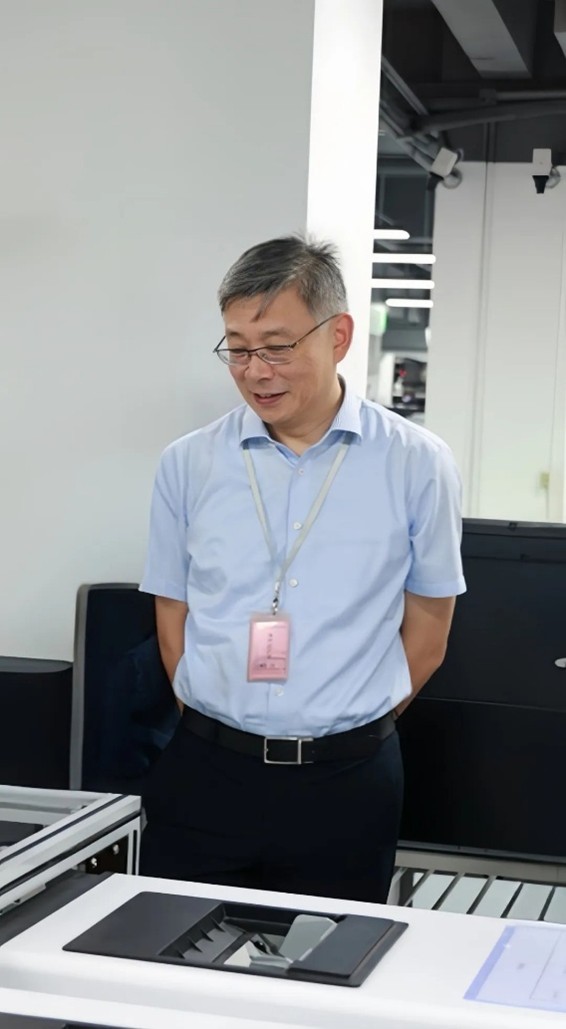
Through a large number of technical application cases in the courses, he became more convinced that we should lay the roots in business scenarios to solve real pain points in terms of practice, we should keep a young mindset and no longer rely on traditional paths in terms of innovation, and we should try to shape industry standards and transform to “leading” from “following” in terms of leadership.
4
About Career, Platform, and Diligence
Three Pieces of Advice for Young People from ZHANG Xiaoqi
When talking about career choice, Mr. ZHANG did not offer any flashy quotes, but insist in his consistent down-to-earth logic: “The premise for choosing your career is the platform; and what determines your career path is diligence.”
“If we only talk about salary, state-owned commercial banks may not offer the highest salary, but they offer large platforms, comprehensive business scope, and a wide range of customers, and these three can accelerate your rapid growth in the financial industry.” When he participated in campus recruitment at his alma mater SUFE, he often started his speech with this sentence.
Mr. ZHANG particularly emphasized “diligence”. “People are roughly similar in intelligence quotient (IQ). So who can go further? The ones who are more focused. If you spend a little more time than others, you will gradually be noticed,” he said.
His career has witnessed his words. From corporate finance to investment banking, inclusive finance, international business, and cash management, his every job transfer came from the trust gained through diligent accumulation. Once, when he was temporarily transferred to the Cash Management Department, he had no relevant experience. Thanks to his background in credit, he broke free from professional constraints, and he gave a well-received training on “Viewing Settlement and Cash Management from a Third Perspective”.
“跨界的好处在于视角变了,问题就能重新建模。”他相信,银行人最需要修炼的是结构性理解能力——“不是你什么都懂,而是你知道如何把不同领域的人串联起来。”
“With crossover experience, you could change your perspective and re-model the problems." Mr. ZHANG believed that the most important skill that a banker needed to grasp was the ability to understand things structurally. “You don't need to know everything, but you should know how to connect people from different fields.”
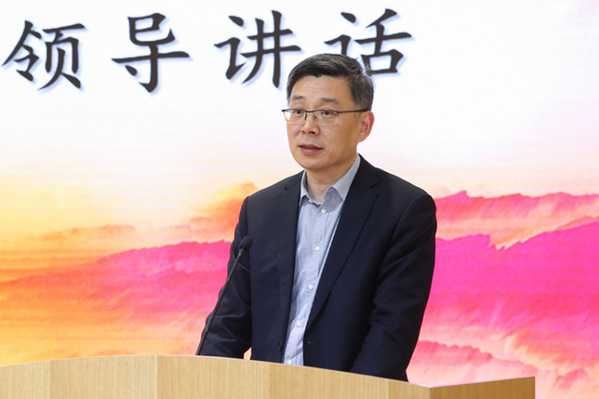
Mr. ZHANG had a clear and profound judgment on “future bankers”. He believed that future financial leaders should possess more comprehensive interdisciplinary capabilities, specifically, they should balance development and security by relying on professional capabilities, improve various business processes by leveraging financial technologies, and optimize team management and incentives by applying psychology.
“We are too easily trapped in the so called ‘professional comfort zones’. In fact, the boundaries among technologies, organizations, and people are becoming increasingly blurred. Banking does not only mean ‘lending’, but ‘empowering’,” Mr. ZHANG said.
Therefore, he strongly advocated “stepping out of the professional comfort zones” and held that we should view businesses from an organizational perspective, view services from a customer perspective, and view finance from a social perspective. “You cannot become a leader with a little knowledge about management, for a leader should be capable of integrating different disciplines into a framework in his mind,” he said.
5
Conclusion
From the glass curtain wall of Lujiazui to the dynamic land of Dishui Lake, ZHANG Xiaoqi put his belief of “walking with the times” into practice through actions. He was not trapped in his past experience, but embraced new knowledge and practical practice, thus achieving the transformation from a manager to a learner, and then to an enabler.
It was not a drastic “revolution”, but a profound “break-through”. With his steady steps, ZHANG Xiaoqi had mapped out the path that a senior banker “danced” with the future of finance.
By virtue of the crossover learning experience in the Program of SUFE-DAFI, he not only broadened his professional horizons, but also verified the financial innovation concept he advocated:
Only by embracing change can we stand at the forefront; and only through collision of minds can we inspire innovation.
About EE
SUFE-DAFI’s Executive Education (EE) leverages the Institute’s premium resources in financial research and education, integrating global educational assets to design customized training programs for enterprises. It also offers public finance and management courses for mid-to-senior executives, nurturing high-caliber financial and economic talents and leaders across sectors to fuel economic development and industrial upgrading. The program strives to bridge advanced international theories with Chinese practice, creating a most valuable lifelong learning platform for emerging finance.