

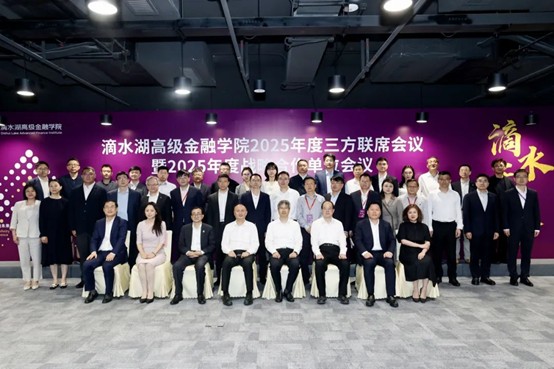
On the afternoon of May 23, 2025, the 2025 Dishui Lake Advanced Finance Institute, Shanghai University of Finance and Economics (“SUFE-DAFI” or the “Institute”) Tripartite Joint Meeting & Strategic Cooperation Partner Meeting (the “Meeting”) was held in the conference room on the 9th floor of DAFI. Jointly guided by three parties - the Lingang New Area Administrative Committee, Shanghai University of Finance and Economics (SUFE), and Shanghai Lingang Economic Development (Group) Co., Ltd. (Lingang Group), the Meeting aimed to systematically review the Institute’s development progress, solicit opinions and suggestions from strategic cooperation partners, and promote the construction of joint mechanisms, resource co-construction and sharing, and shared missions.共建三方领导出席本次会议。
Leaders from the three co-construction parties attended the Meeting, including: XU Tao, Secretary of the Party Committee of SUFE, YANG Zhengwei, Member of the Party Working Committee of Lingang New Area and Executive Deputy Director of Lingang New Area Administrative Committee, LIU Yuanchun, President and Deputy Secretary of the Party Committee of SUFE), HUANG Qiang, Deputy Secretary of the Party Committee of Lingang Group, and YANG Jing, Chief Financial Officer of Lingang Group.
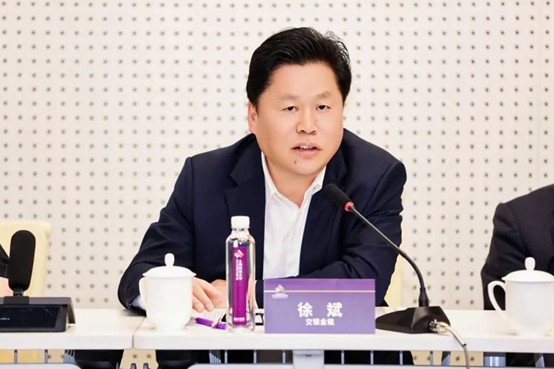
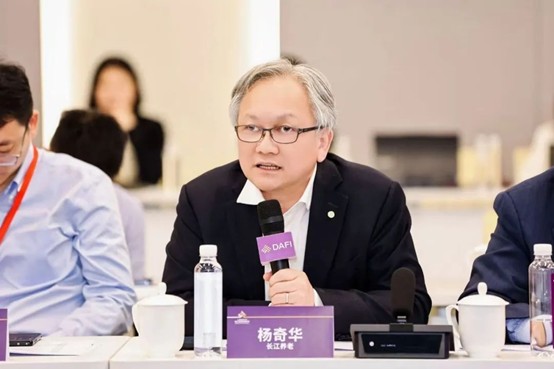
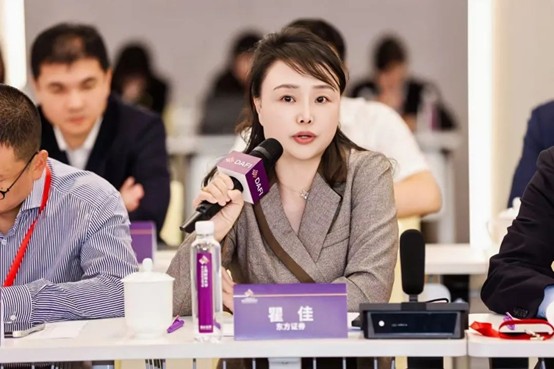
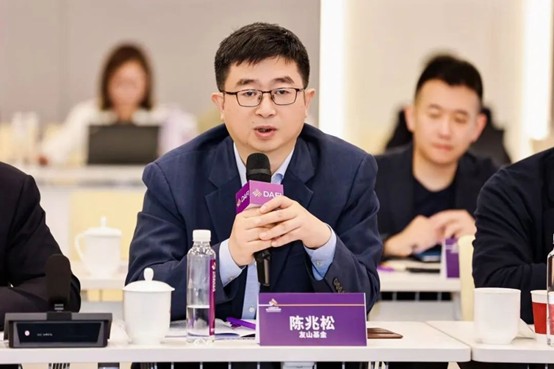
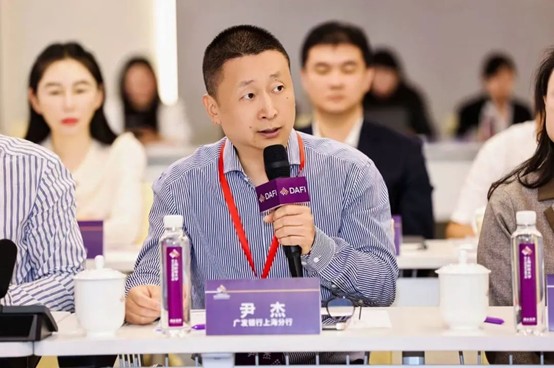
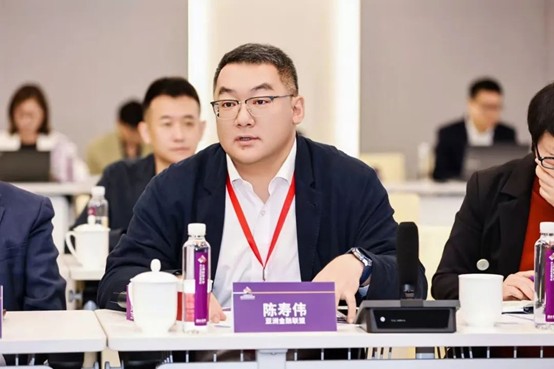
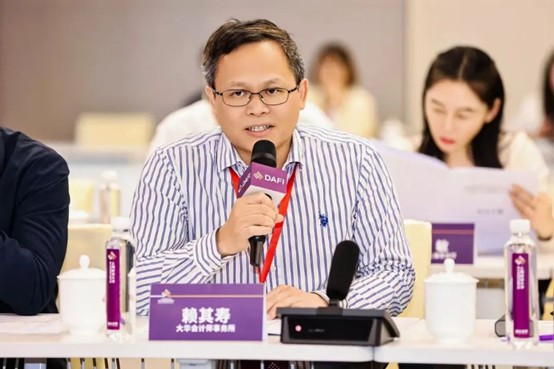
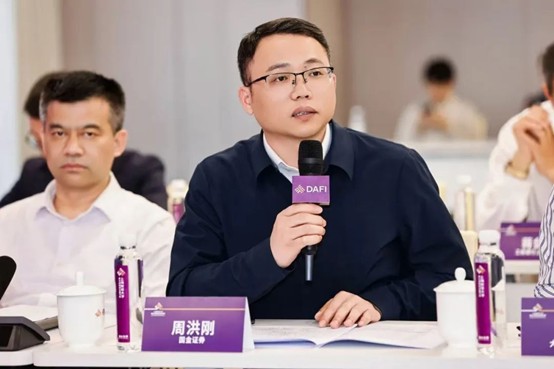
Nearly 50 guests from strategic cooperation institutions and the Joint Meeting Office attended the Meeting. Among the guests from strategic cooperation institutions were: XU Bin, Chief Expert of Bank of Communications, Secretary of the Party Committee and Chairman of the Board of Directors of Bank of Communications Financial Leasing Co., Ltd., ZHAI Ji, Member of the Party Committee and Vice President of Shanghai Branch of Agricultural Bank of China, GUI Zhiguo, Member of the Party Committee of CCB Life Insurance Co., Ltd., ZHANG Shuangxi, Member of the Party Committee and (Proposed) Deputy General Manager of Taiping Asset Management Co., Ltd., XU Li,Political Commissar of the Economic Investigation Detachment of Pudong Branch of Shanghai Public Security Bureau, LIN Jingran, Vice President of China Zheshang Bank Head Office, Secretary of the Party Committee and President of Shanghai Branch of China Zheshang Bank, ZHAO Yunfeng, Secretary of the Party Committee and President of Yangpu Sub-branch, Shanghai of Industrial and Commercial Bank of China, JIN Xing, Secretary of the Party Committee and President of Yangpu Sub-branch, Shanghai of Bank of China, CHEN Zhaosong, President of Youshan Fund Management Co., Ltd., YAN Jun, Member of the Party Committee and Deputy General Manager of Shanghai International Trust Co., Ltd., YANG Qihua, Member of the Party Committee and Deputy General Manager of Changjiang Pension Insurance Co., Ltd., QU Jia, Deputy Secretary of the Party Committee of Orient Securities Co., Ltd., LI Zhenhua, Dean of Ant Group Research Institute, YIN Jie, Vice President of Shanghai Branch of China Guangfa Bank, CHEN Shouwei, Secretary-General of Asia Financial Alliance, LAI Qishou, Managing Partner of Shenzhen Branch of Dahua Certified Public Accountants, SHAO Jiamin, Deputy General Manager and Fixed Income Director of China Universal Asset Management Co., Ltd., and ZHOU Honggang, Secretary of the Board of Directors of Guojin Securities Co., Ltd.
Representatives from the Joint Meeting Office included: WU Conghong, Secretary of the Party Committee of Lingang Technology City Co., Ltd., CHEN Jiong, Chairman of the Board of Directors of Lingang Technology City Co., Ltd., PANG Shuguang, Deputy Secretary of the Party Committee and General Manager of Lingang New Area Economic Development Co., Ltd., as well as representatives from the Finance and Trade Department, the Social Development Department of Lingang New Area Administrative Committee, and the Financial Development Department of Lingang Group.
The Meeting was hosted by LIU Liya, Member of the Standing Committee of the Party Committee and Vice President of SUFE.

Breaking New Ground and Marching Toward the 2.0 Era
At the beginning of the Meeting, Professor CHEN Xuanjuan, Executive Dean of SUFE-DAFI, delivered a work report. Focusing on six key areas, i.e. mechanism construction, disciplinary layout, talent recruitment and cultivation, curriculum reform, think tank development, and international cooperation, she systematically reviewed the Institute’s key achievements in institutional innovation and connotative development over the past year.
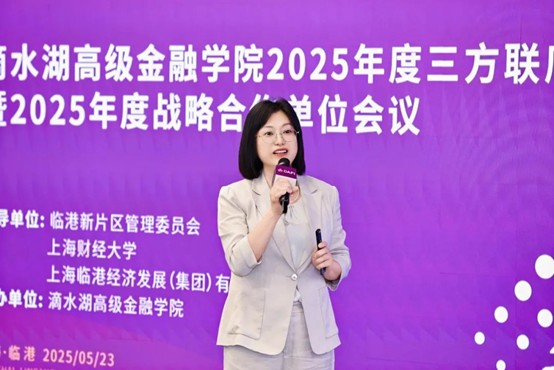
She pointed out that over the past year,SUFE-DAFI had continued to advance its “5+1” strategic layout, building a dual-driver system of curricula and think tanks covering ESG finance, AI finance, cross-border finance, reinsurance, and policy research. Through the “global recruitment + local strong presence” model, the Institute gathered high-level talents, successfully introducing several prominent scholars including national-level talents and overseas distinguished professors. The AI finance curriculum system had been fully launched, and in-depth cooperation with international universities such as the University of California, Berkeley and Emory University were established to co-build multi-level teaching programs, marking initial progress in its internationalization strategy.
Meanwhile, the Institute adhered to serving national strategies with high-quality research. Its think tank achievements were adopted on multiple occasions, contributing intellectual support to policy formulation and regional development. The Institute also carried out extensive executive training and thematic seminars for enterprises and local governments, serving over 1,000 enterprise participants in total and jointly fostering a financial talent ecosystem with strategic cooperation partners.
Pooling Wisdom for In-depth Cooperation
In the speech session of strategic cooperation partners, guests from the banking, securities, insurance, and technology sectors put forward constructive suggestions on new finance talent cultivation, curriculum system optimization, and industry-education integration mechanisms, combining their respective business practices.
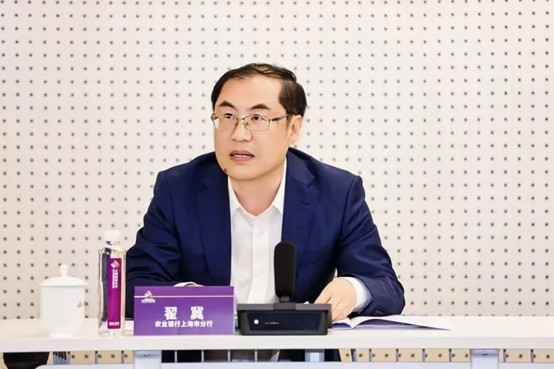
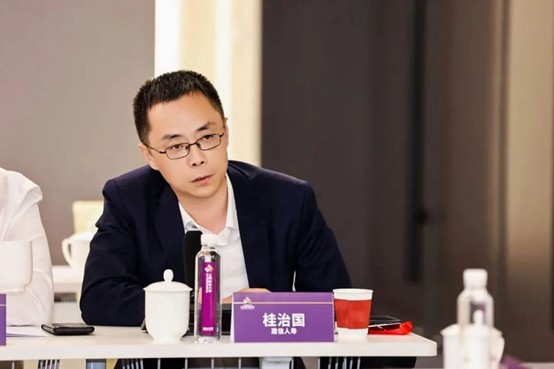
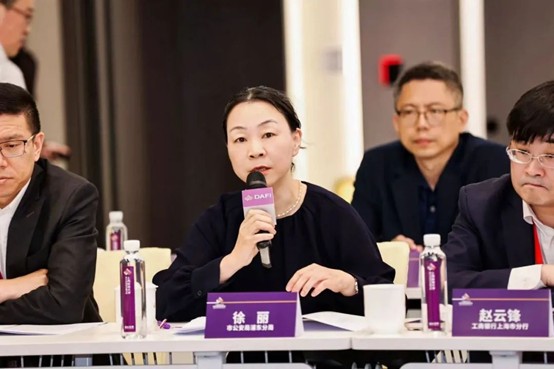
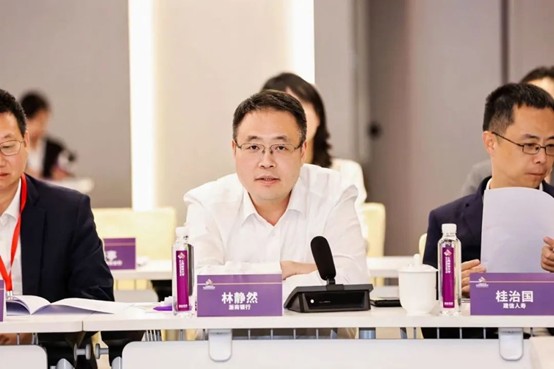
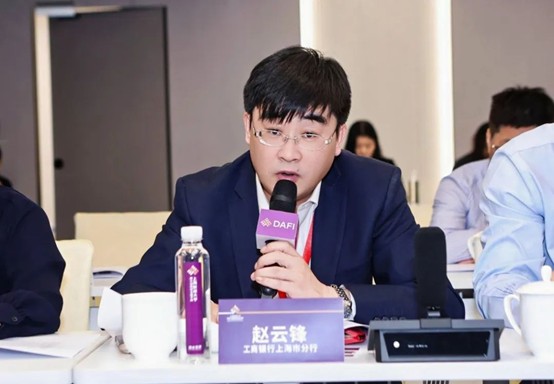
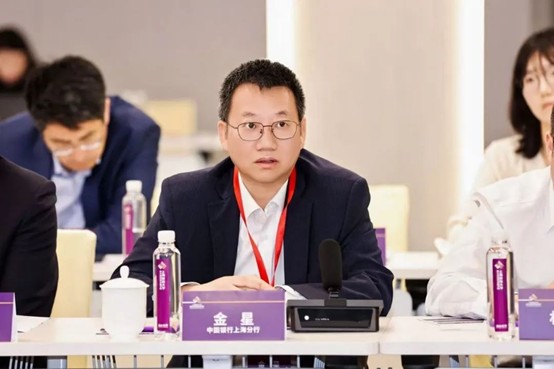
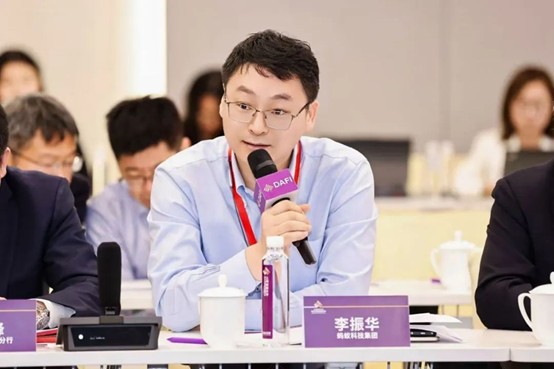
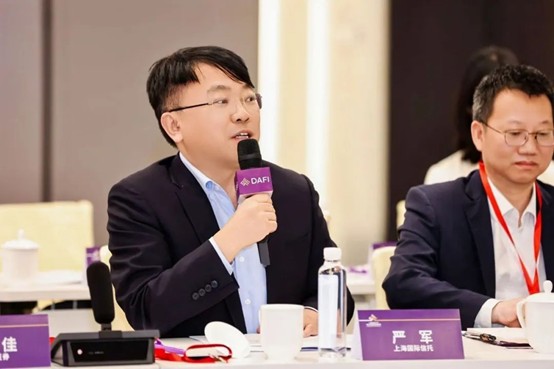
Participants generally agreed that driven by institutional innovation and open collaboration, SUFE-DAFI was gradually building a strategic cooperation platform integrating academic research, talent cultivation, and industrial scenarios. They expressed expectations for deeper resource co-construction and scenario collaboration in areas such as ESG finance, cross-border finance, ageing finance, AI finance, compliance governance, and executive training in the future, to inject stronger momentum into financial education innovation and regional development.
Tripartite Discussion on Development: Jointly Blueprinting a Collaborative Framework for Institutional Opening-up
In the speech session of members and conveners of the Tripartite Joint Meeting, leaders from the Lingang New Area Administrative Committee, Lingang Group, and SUFE conducted in-depth exchanges on SUFE-DAFI’s development direction against the backdrop of institutional opening-up.
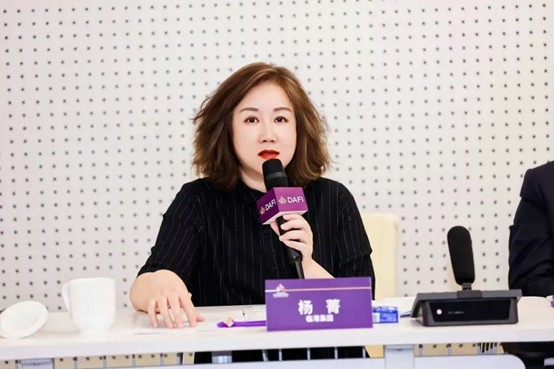
CFO YANG Jing pointed out that SUFE-DAFI was a platform with both “originality” and “upgrading potential”: born from the functional positioning of the Lingang area, it was deeply integrated with regional development. In the future, it should move toward the role of a “major IP” and become a key disseminator of financial ideas and regional brands. She suggested that the Institute should further strengthen the construction of international exchange platforms, expand “going global” programs, and explore new paths for international talent recruitment and internationalized education.
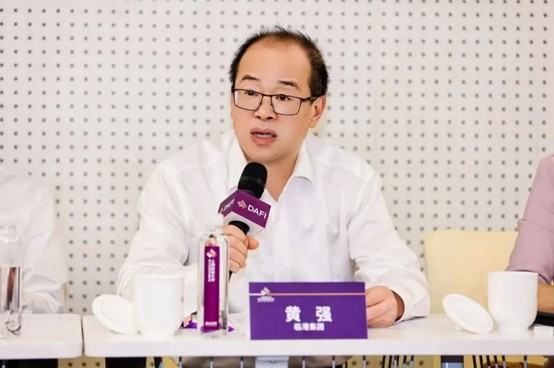
Deputy Secretary HUANG Qiang stated that Lingang Group would continue to provide multi-dimensional support for SUFE-DAFI’s development in areas such as training support, platform co-construction, and undertaking major research projects. He also expressed hope that SUFE-DAFI would play a more proactive role in finance serving the real economy, especially by increasing financial training and scenario integration for private enterprises.
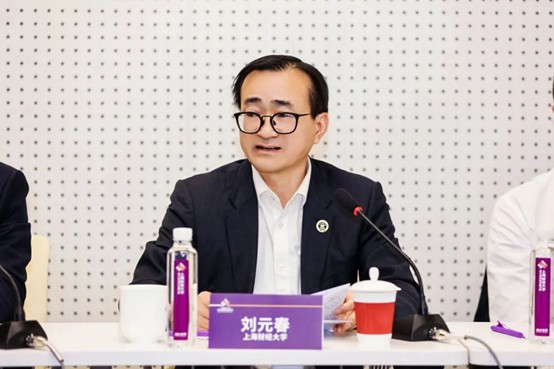
President LIU Yuanchun emphasized in his speech that the second phase of SUFE-DAFI’s development tasks focused on comprehensive upgrading. He pointed out that the Institute should build a faculty team centered on “new finance”, form a systematic curriculum system and research themes, and create a teaching and think tank platform with global competitiveness. At the same time, he clearly stated that the Institute “should not copy other models” but rather base itself in China, penetrate real scenarios, and blaze an innovative path of Chinese-style financial education.
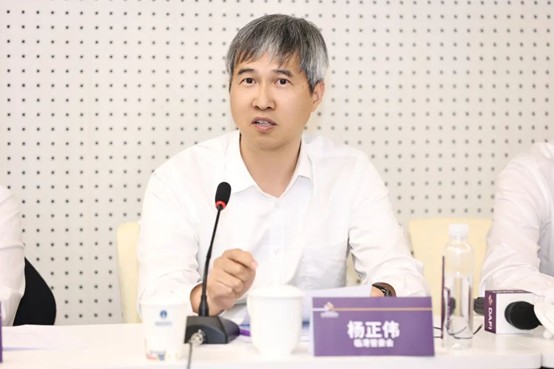
Executive Deputy Director YANG Zhengwei noted that as the undertaker of Shanghai’s “Five Centers” construction, Lingang New Area was in greater need of SUFE-DAFI’s strategic leadership and institutional innovation support. He hoped that the Institute would continue to focus on emerging finance, high-end talent cultivation, and regional brand promotion & introduction, truly building itself into a world-class financial institute to empower regional development.
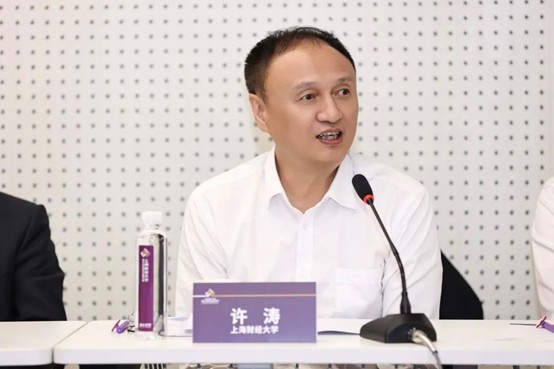
Secretary XU Tao emphasized in his concluding speech that the fundamental mission of SUFE-DAFI was to serve major national strategies and empower regional industrial upgrading. At the critical stage of moving toward high-quality development, the Institute urgently needed to improve its “self-sustaining development mechanism” while relying on the continuous investment and collaborative support of the three co-construction parties and strategic partners. Together, they would explore and forge an innovative paradigm of modern financial education with Chinese characteristics in the pilot field of institutional opening-up.
2025 is a crucial year for SUFE-DAFI to move toward its “Version 2.0”. The holding of the Meeting not only reconsolidated the strategic coordination mechanism of the tripartite joint platform but also injected cooperative momentum and intellectual resources into the Institute’s next stage of development. In the future, the Institute will continue to deepen its roots in Lingang, serve national strategies, and write a new chapter in financial education reform in the pilot field of institutional opening-up.