



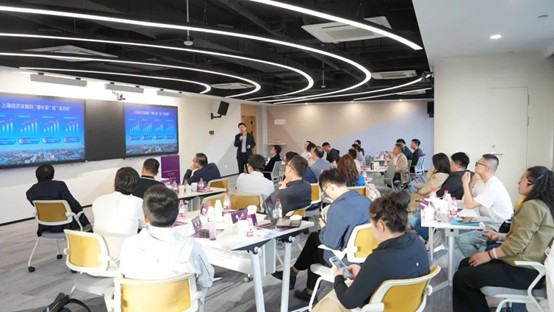
On May 9, 2025, the first session of the Capital Strategy Planning Salon themed “Telling a Compelling Industry Story to the Capital Market” (the “Event” or “Salon”), co-hosted by Dishui Lake Advanced Finance Institute, Shanghai University of Finance and Economics (“SUFE-DAFI” or the “Institute”) and Guojin Securities, concluded successfully in the Lingang New Area. The Event gathered over 30 representatives from sci-tech innovation enterprise founders, investors, and financial institutions. Focused on in-depth discussions around technology commercialization paths, capital narrative logic, and risk management, it aimed to build a bridge for industry-finance connection, establish a new paradigm of industry-finance synergy, and inject new impetus into enterprise development.
Dr. CAO Yang, Deputy Director of the High-tech Division of the Lingang New Area Administrative Committee, Executive Deputy General Manager of Lingang New Area International Investment and Development Co., Ltd., LUO Yuding, Professor of SUFE-DAFI, CHEN Xin, Professor of SUFE-DAFI and Director of the Capital Market Research Center, YANG Liguo, Executive Committee Member of the Investment Banking Department at Guojin Securities, General Manager of the Capital Consulting Headquarters at Guojin Securities, and ZHAO Dongbiao, Deputy General Manager of the Financial Services Professional Committee of Shanghai Lingang Chamber of Commerce & Shanghai Lingang New Area Financing Guarantee Co., Ltd.. attended the Event.
Industry-finance Dialogue: Decoding the “Industry Language System” of the Capital Market
The Salon addressed the core pain point directly at the opening: Against the backdrop of the capital market advancing high-quality development through both stock and incremental measures, how can sci-tech innovation enterprises efficiently convey their commercial value, bridge the cognitive gap between technological barriers and capital demands, and establish a valuation system aligned with their capital strategy?
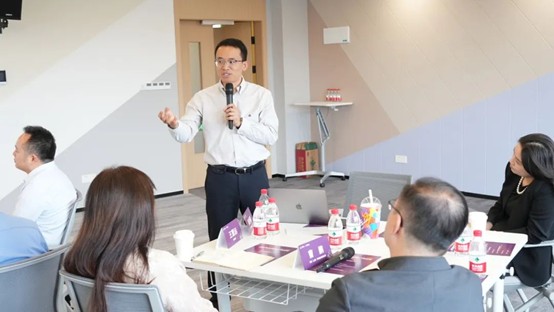
YANG Liguo, General Manager of the Capital Consulting Headquarters at Guojin Securities, proposed the “Narrative Framework of Capital Strategy Diamond Model”, by constructing five models (Profit-making Model, Capital Management Model, Profit-sharing Model, Financial Calculation Model, and Valuation Model), with the value transmission of the commercial profit model as the anchor, the profit distribution mechanism as the fulcrum, the financial accounting system as the focus, the internal control management system adapting to the enterprise life cycle as the inflection point, and the enterprise valuation model as the endpoint. He shared how enterprises could design a capital strategy plan tailored to themselves and tell their unique industry story to the capital market. Mr. YANG emphasized the analysis of cases such as Wahaha, DONG Yuhui, and Bossco to illustrate how enterprises could build “profit-making” and “profit-sharing” models to achieve healthy development and valuation growth. He particularly stressed that against the dual backdrop of accelerated technological iteration and the return of capital rationality, capital strategic thinking was no longer an exclusive topic for enterprises preparing for IPOs, but the underlying logic for enterprises to build long-term competitiveness.
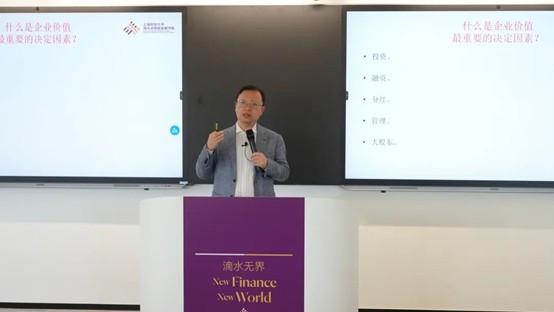
From another perspective, the growth and expansion of sci-tech innovation enterprises often required large-scale financing, and the choice of their financing models and their impact on investors were worthy of exploration. Professor CHEN Xin of SUFE-DAFI and Director of the Capital Market Research Center conducted an in-depth analysis of investment and financing as well as risk management for sci-tech innovation enterprises.
Taking typical cases such as BOE’s “local government financing model”, Seres’ “financing model empowered by Huawei”, and BeiGene’s “triple-listing financing model”, he demonstrated the unique shaping effect of China’s capital market on the investment and financing behaviors of sci-tech innovation enterprises. Driven by the demand for investment promotion, Capital with local government backgrounds tended to provide substantial financing to asset-heavy enterprises with relatively clear technological routes, facilitating these enterprises to rapidly expand production capacity and release profits in a short period. However, if such sci-tech enterprises featured strong cyclicality, heavy assets, and high leverage, their systemic risks were also significant; once facing macroeconomic fluctuations or external shocks, they would suffer greater negative impacts, and their high profitability would be difficult to sustain. Meanwhile, some sci-tech enterprises relied on long-term and large-scale equity financing from the primary and secondary markets to support their huge R&D expenditures, yet struggled to achieve sustainable operating profits for a long time. The investment and financing behaviors of sci-tech enterprises reflected the agency problem between major shareholders & management and minority shareholders & creditors. Investors should also understand and judge the risks and valuations of sci-tech enterprises from the perspective of corporate governance.
Practical Empowerment: One-on-One Consultation to Solve Personalized Capital Planning Challenges
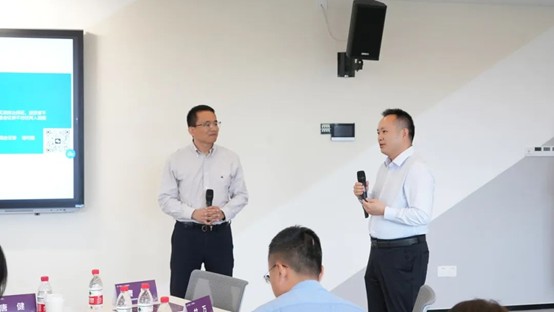
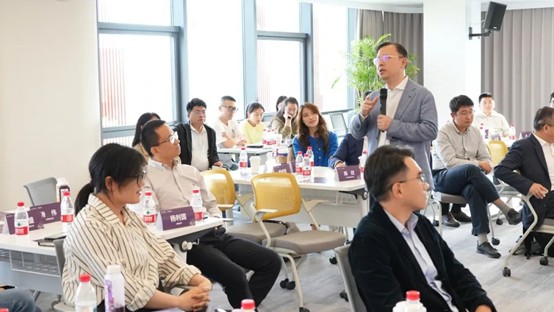
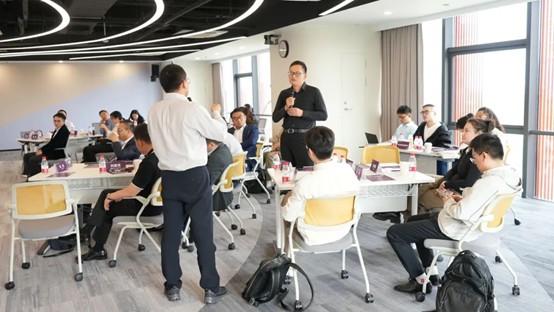
In the “Closed-door Consultation” session, enterprise representatives engaged in in-depth discussions with consulting guests YANG Liguo, SONG Wei, and CHEN Xin, bringing forth their questions and thoughts. A representative from a high-end security and medical equipment enterprise raised an industry-wide common challenge: How do we explain the cycle mismatch between technological investment and commercial returns to financial investors? This question directly targeted the financing pain point of sci-tech enterprises. The guests proposed a solution: Enterprises should proactively adjust their capital structure, prioritize the introduction of strategic investors with industrial synergy effects, and through the design of Valuation Adjustment Mechanisms (VAM), shift investors’ focus from “technological investment costs” to the core value indicators where the enterprise had advantages.
Regarding the listing location selection of a pet service platform, the participating guests conducted an in-depth analysis of the current status and potential risks of major global capital markets, pointing out that enterprises should prioritize seizing the listing opportunity rather than overemphasizing the location choice. “Currently, Hong Kong stocks are under valuation pressure, U.S. stock supervision is tightening, and A-share thresholds are clear. For growing enterprises, seizing the first-mover advantage in the capital track is more critical than pursuing valuation premiums.”
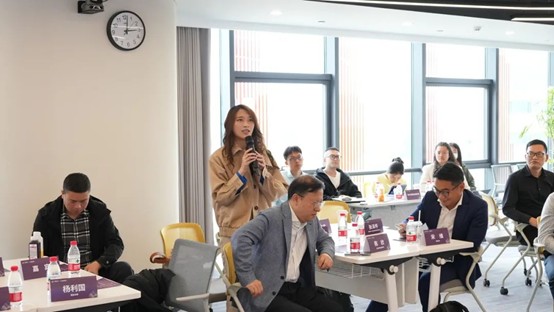
The M&A deadlock facing a semiconductor enterprise was more representative of the industry. The guests suggested that the enterprise could start by adjusting the valuation model and optimizing the negotiation process to enhance bargaining power and restructure negotiation discourse power.
Lingang Opportunities: Dual-driven by Ecological Co-construction and Policy Empowerment
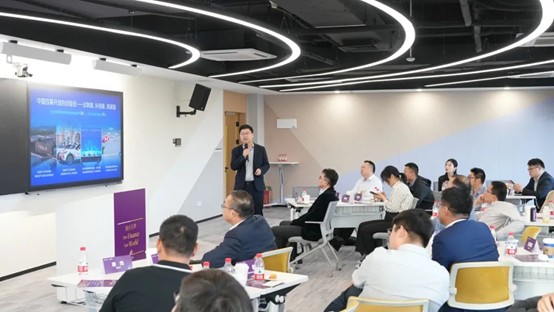
Dr. CAO Yang, Deputy Director of the High-tech Division of the Lingang New Area Administrative Committee and Executive Deputy General Manager of Lingang New Area International Investment and Development Co., Ltd., provided a detailed interpretation of the development of cutting-edge industries in Lingang New Area. Focusing on the “4+1” industrial system (integrated circuits, civil aviation, new energy vehicles, high-end equipment, and digital economy), Lingang New Area was building a competitive 100-billion-level industrial cluster. Dr. CAO emphasized that in the face of the new economic situation, Lingang New Area was building a first-class pro-business environment, highlighting targeted policy efforts, establishing professional investment promotion companies and enterprise service centers, and creating an “innovation hotbed” for bidirectional empowerment of capital and technology, contributing to Shanghai’s efforts in building more competitive industrial clusters.
Value Resonance Laboratory: Building the “Lingang Paradigm” for Technology Commercialization
Lingang’s mission is not only to cultivate “single-item champions” but also to become an innovative testbed for technology commercialization paths. This Salon is SUFE-DAFI’s first attempt to help enterprises and capital achieve value resonance. The Institute will continue to provide industrial insights, capital toolkits, and policy roadmaps to help sci-tech enterprises build a conversion closed-loop of “technological language - commercial logic - capital narrative”, enabling the capital market to truly become an accelerator for the growth of hard-tech enterprises, rather than a simple valuation game.
In the future, the Institute will continue to focus on serving the industrial ecological construction of semiconductors, artificial intelligence, and other fields in Lingang. Through a normalized resource connection mechanism, it will promote the transformation of the “Value Resonance Laboratory” into “Value Resonance Achievements”, allowing every breakthrough technology to grow into an industrial forest of China’s hard technology under the nourishment of capital.
About EE
SUFE-DAFI’s Executive Education (EE) leverages the Institute’s premium resources in financial research and education, integrating global educational assets to design customized training programs for enterprises. It also offers public finance and management courses for mid-to-senior executives, nurturing high-caliber financial and economic talents and leaders across sectors to fuel economic development and industrial upgrading. The program strives to bridge advanced international theories with Chinese practice, creating a most valuable lifelong learning platform for emerging finance.