



NEWS
The 6th China Applied Economics Annual Conference
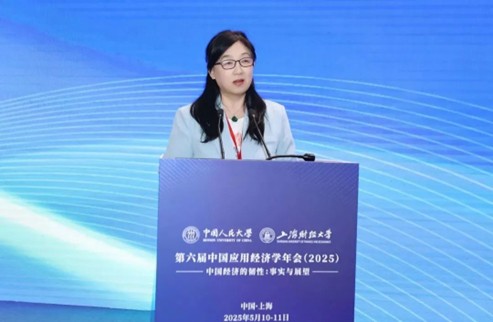
Against the backdrop of profound evolution of the global economic environment and China’s comprehensive advancement of high-quality development, the 6th China Applied Economics Annual Conference (the “Conference”), guided by the Discipline Appraisal Group of the Academic Degree Commission of the State Council and co-hosted by Renmin University of China (RUC) and Shanghai University of Finance and Economics (SUFE), was held in Lingang, Shanghai, from May 10 to 11, 2025.
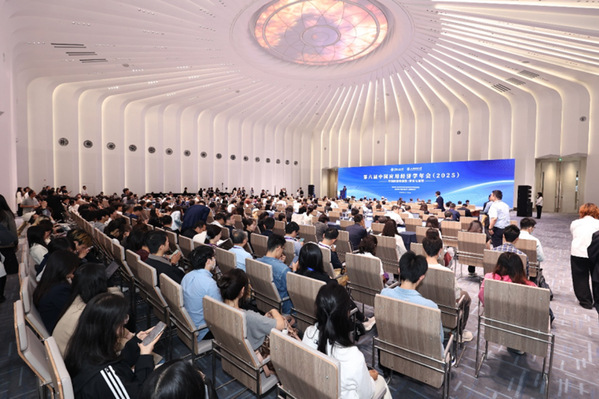
With the theme “The Resilience of China's Economy: Facts and Prospects”, the Conference brought together authoritative experts and scholars in the field of applied economics from across the country. They conducted in-depth exchanges and discussions on key issues such as resilient policy design under economic cycles, paths of structural reform, industrial transformation and upgrading, and the sustainability of local finance. The Conference also provided suggestions for advancing the frontier development in the discipline and serving national strategies.
Opening Ceremony: Discussing Mission and Responsibility
On the morning of May 11, 2025, the Conference’s opening ceremony was held. Representatives from universities and research institutions across the country gathered to witness this academic event.
Speakers delivering opening remarks reviewed the development history of China’s applied economics discipline system, emphasized the discipline’s epochal mission in serving national strategies and responding to practical challenges, and set the tone for the ideological focus of the Conference.
LIU Yuanchun, President of SUFE, stated in his speech that since its establishment in 2019, the China Applied Economics Annual Conference has always kept pace with the times, taken root in China's reality, and undertaken the mission of the discipline. It has become an important platform for promoting disciplinary development and facilitating exchanges and cooperation. He specifically mentioned that in recent years, SUFE has made systematic layouts around platforms such as Dishui Lake Advanced Finance Institute (DAFI), the School of Digital Economy, and the School of Computer Science and Artificial Intelligence, and has been actively building a new highland for disciplinary development led by applied economics.
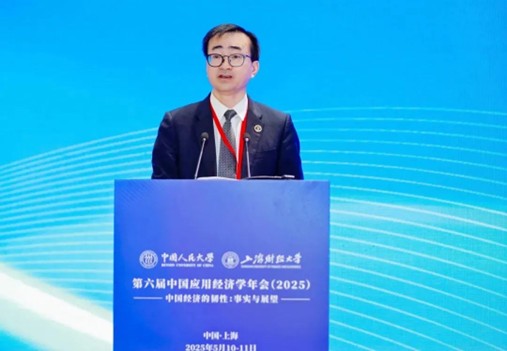
ZHENG Xinye, Vice President of RUC, shared the theoretical concept of the “new quality productive forces function” in his speech. He emphasized the need to construct a new-era growth model from a macro perspective and deeply understand the in-depth challenges posed by the “Facing Three Aspects” to policy goals and growth logic. He noted that investing in human capital, new-type infrastructure, equipment upgrading, and strategic hinterlands was a key direction for enhancing China’s economic resilience.
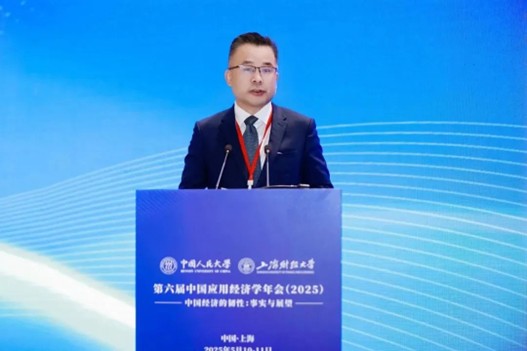
LYU Wei, Convener of the Discipline Appraisal Group of the Academic Degree Commission of the State Council and Former President of Northeast University of Finance and Economics, mentioned in his speech that applied economics should not only respond to the changing times but also embody the disciplinary character of “being useful”. Starting from the impact of artificial intelligence (AI), countercurrents of globalization, and resilient practices in micro-level cases (such as Yiwu), he emphasized the urgency of constructing an economics framework with Chinese characteristics and a reality-oriented focus.
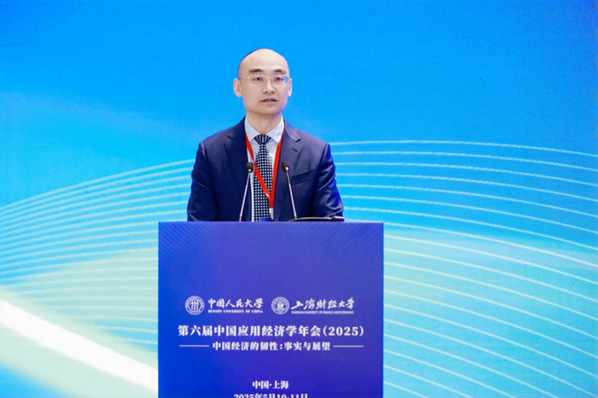
The opening ceremony was hosted by YAO Lingzhen, Vice President of SUFE.
Keynote Speeches: Building Consensus on Ideas
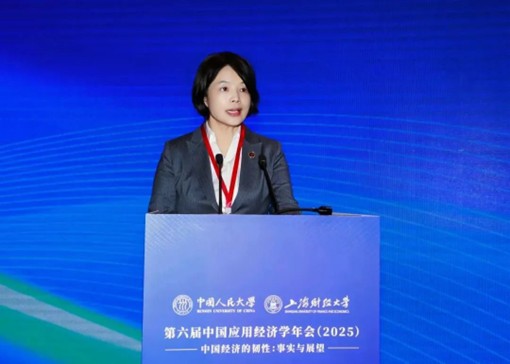
Speakers of the keynote speeches conducted in-depth analyses on topics including manufacturing upgrading, fiscal system reform, financial system construction, and macro-policy evaluation. They jointly explored the underlying logic and future paths of China’s economic resilience amid growing global uncertainties, systematically demonstrating the high-level interaction between the academic community in explaining reality and constructing theories. This further deepened the consensus on “reshaping economic resilience through Chinese path to modernization”.
HUANG Qifan, Executive Vice Chairman of the Academic Committee of the National Strategy Research Institute for Innovation and Development and Former Mayor of Chongqing, delivered a speech themed “Made in China 2025”, systematically reviewing five major transformations in China’s manufacturing sector during its decade-long leap forward. He stated that China’s manufacturing industry achieved a historic leap and revolutionary transformation in ten key fields, moving from “large but not strong” to “large and relatively strong”, and further to “large and strong”. Its products shifted from the medium-low end to the medium-high end, and comprehensive optimization was achieved in manufacturing structure, export structure, and production methods, forming a comprehensive modern industrial system with high added value.
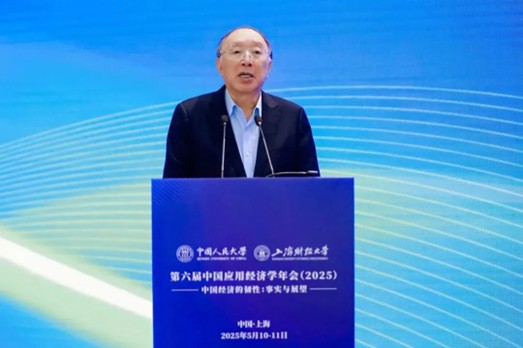
GAO Peiyong, Member of the Discipline Appraisal Group of the Academic Degree Commission of the State Council, Former Vice President of the Chinese Academy of Social Sciences (CASS), and Member of the CASS Academic Divisions, analyzed the “sources of China’s economic resilience”. He emphasized the need to attach great importance to mobilizing the enthusiasm of three parties: residents, enterprises, and local governments. He called for advancing the tax-sharing system reform to systematically enhance local governments' independent financial resources and promote the fiscal and tax system to support in-depth structural reform.
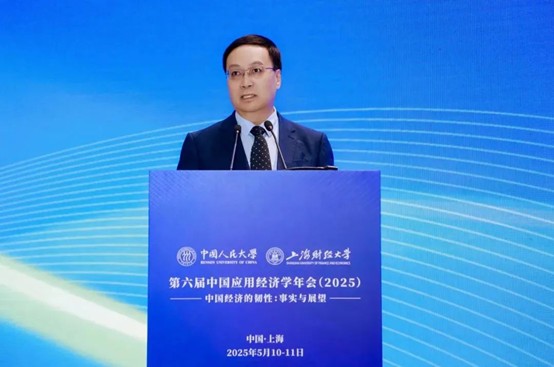
WU Xiaoqiu, Convener of the Discipline Appraisal Group of the Academic Degree Commission of the State Council, Former Vice President of RUC, Dean of the National Institute of Finance, and National First-class Professor, delivered a speech titled “The Value of Finance”. He explored the legal guarantees and institutional improvements for China’s long-term sustainable economic development. He proposed that equal emphasis must be placed on marketization, rule of law, expanding domestic demand, and opening up to the outside world, and systematically expounded on the indispensable role and institutional value of the financial system in advancing the modernization of the economy and society.
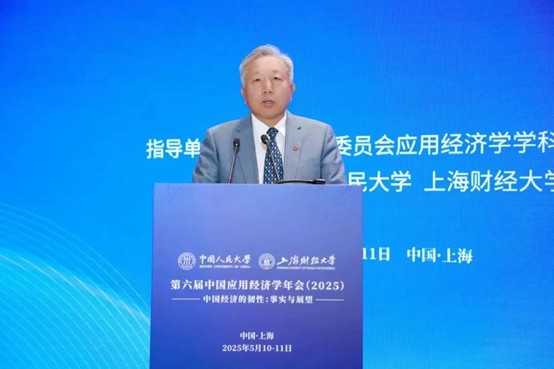
YAO Yang, Professor at the National School of Development, Peking University, delivered a speech titled “Rethinking Deleveraging in 2017-2018”. He reviewed the causes and effects of the deleveraging policy, noting that while it improved system stability, it may have also restrained innovative financing and local vitality. He stated that local government debt had a “positive accelerator effect” in improving infrastructure and financing capacity, and that the debt governance mechanism should be reshaped within an institutional framework to avoid financial structure imbalance.
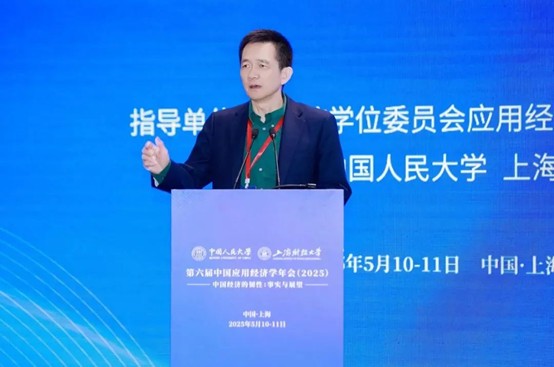
The keynote speech session was hosted by MA Haitao, Secretary-General of the Discipline Appraisal Group of the Academic Degree Commission of the State Council and President of Central University of Finance and Economics (CUFE).
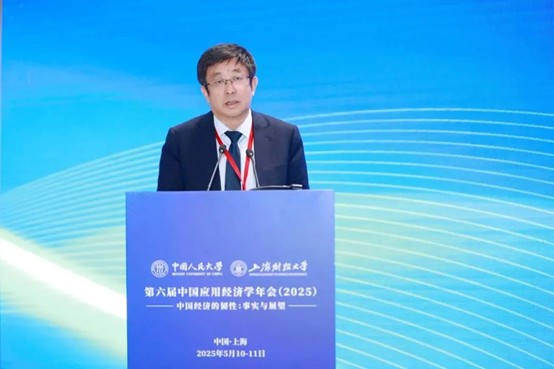
University Presidents’ Forum: In-depth Dialogue Among Universities
At the University Presidents’ Forum themed “The Resilience of China's Economy: Facts and Prospects”, leaders from multiple universities conducted in-depth exchanges on topics such as the mission of higher education, talent cultivation in applied economics, and academic support for national governance capacity.
JIANG Chuanhai, Member of the Discipline Appraisal Group of the Academic Degree Commission of the State Council and Secretary of the Party Committee of East China University of Science and Technology (ECUST), delivered a keynote speech on the topic of “Global Industrial Chain Restructuring and China’s Response Strategies”. He stated that China should focus on enhancing independent innovation capacity and industrial chain stability to consolidate the security foundation and strengthen economic resilience amid the new round of global industrial restructuring.
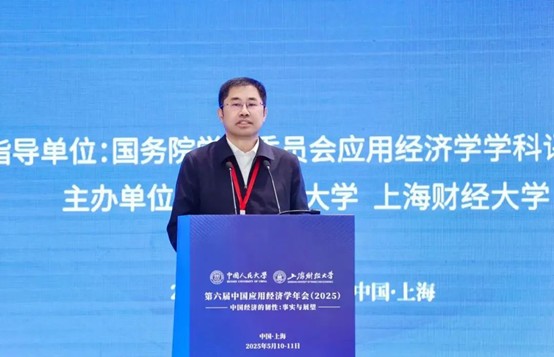
HONG Junjie, Member of the Discipline Appraisal Group of the Academic Degree Commission of the State Council and President of Shandong University of Finance and Economics
He emphasized that in the current environment, built on continuous good job in domestic economic work, continuously advancing high-level opening-up and optimizing regional cooperation mechanisms were the key paths to enhancing the resilience of China’s economic system and responding to global uncertainties.
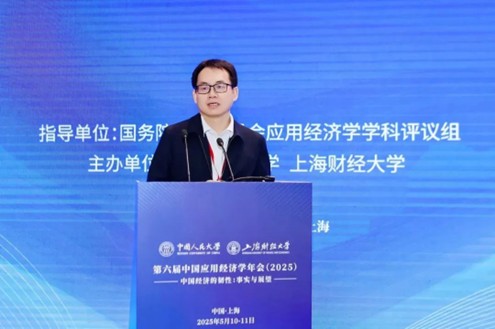
ZHUO Zhi, Member of the Discipline Appraisal Group of the Academic Degree Commission of the State Council and Former President of Southwestern University of Finance and Economics, deeply elaborated on the core role of the insurance industry as an economic “shock absorber” and a social “stabilizer”. He stressed that by improving the multi-level insurance security system and building a technology-empowered risk management system, we should consolidate the insurance security network for “economic shock absorption” and “social stability”, serve people’s livelihood security and the real economy, and help enhance the endogenous stability and development resilience of China’s economy.
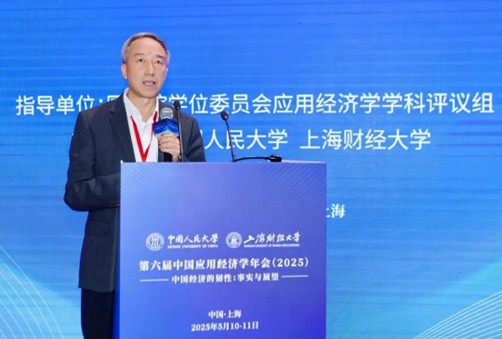
YANG Canming, Member of the Discipline Appraisal Group of the Academic Degree Commission of the State Council and Former President of Zhongnan University of Economics and Law, focused on the theme of “Income Distribution and Economic Resilience”, emphasizing the important role of the income distribution system in building a resilient economic structure. He believed that the coordination of fairness and efficiency is not a “zero-sum game”, and the key lay in the matching of institutional design and development logic.
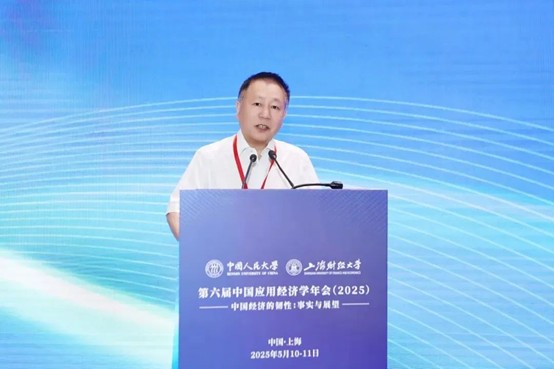
LIANG Qi, Member of the Discipline Appraisal Group of the Academic Degree Commission of the State Council and Deputy Secretary of the Party Committee of Nankai University, started from the concept of “resilience” and shared unique insights combined with his teaching and scientific research experience. He argued that for resilience in China’s economic development in the new era, the role of universities could not be separated from the theoretical support of the academic community and the belief support of young scholars.
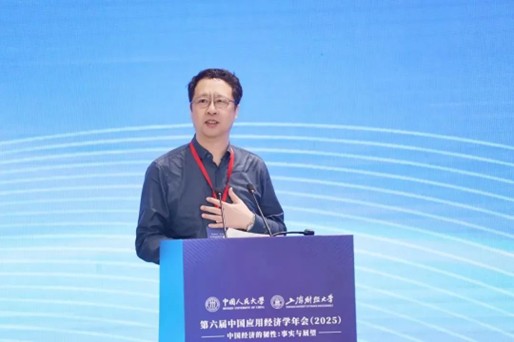
DENG Hui, President of Jiangxi University of Finance and Economics, conducted an in-depth analysis of the milestone significance of the implementation of the Private Economy Promotion Law for the high-quality development of the private economy. He advocated for consolidating the foundation of a law-based business environment with the governance concept of “right-based and justiciable”, so as to enhance the institutional resilience of China’s economy from the perspective of the rule of law.
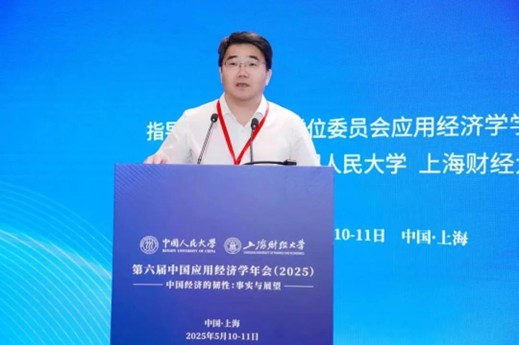
WU Weixing, President of Capital University of Economics and Business, explored the reshaping of economic resilience against the background of in-depth adjustment of demographic structure. He proposed a systematic plan including building an inter-departmental linkage mechanism, promoting the development of the elderly care and child care industry, and improving fertility support policies, providing new ideas for alleviating the impact of population transition and enhancing the sustainable development capacity of the economy.
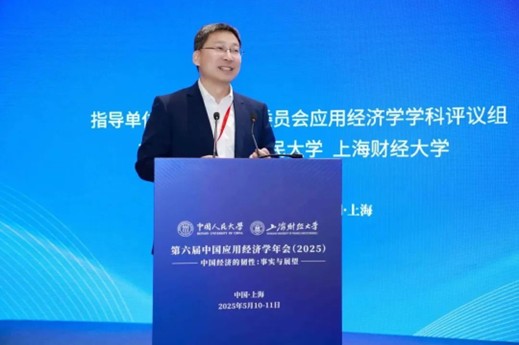
FANG Ying, Vice President of Xiamen University, systematically presented his team’s research progress in empowering corporate innovation with large language models, emphasizing that AI was becoming a key force driving technology integration and industrial upgrading. He stated that boosting the construction of economic resilience required not only the support of hard power, but also new quality productive forces centered on digital intelligence.
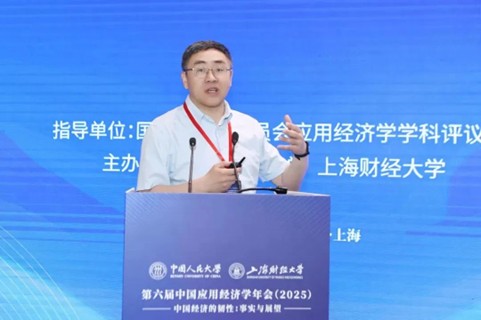
The University Presidents’ Forum was hosted by LIU Liya, Vice President of SUFE.
Plenary Forums: Discussion on Economic Resilience
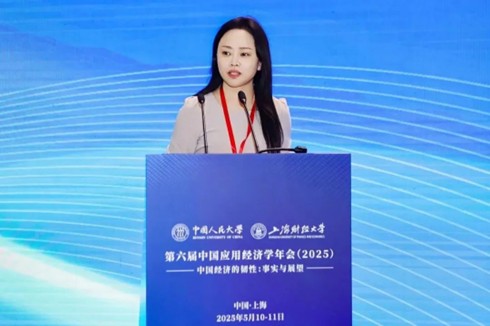
In the afternoon “Plenary Forums” session, the focus shifted to thematic discussions with stronger practical relevance and policy application orientation. Experts and scholars from universities and research institutions across the country discussed practical issues, responded to the systematic challenges and institutional responses facing China’s economy in the complex cycle, and provided in-depth insights for applied economics to serve the modernization of national governance.
MA Yaming, Member of the Discipline Appraisal Group of the Academic Degree Commission of the State Council and Vice President of Tianjin University of Finance and Economics; ZHANG Jinqing, Professor of Fudan University; GONG Liutang, Professor of Wuhan University; LI Yongyou, Professor of Zhejiang University of Finance and Economics; LI Zhisheng, Vice President of Southwestern University of Finance and Economics; YI Xingjian, Vice President of Guangdong University of Finance; WEI Chu, Dean of the School of Applied Economics at RUC; and LIN Chen, Executive Vice Dean of the Graduate School at RUC, conducted in-depth analysis and exchanges on topics such as China-US economic decoupling and opening-up, new quality productive forces, local debt governance, trade policy uncertainty, residents’ income and domestic demand structure, government information disclosure, the impact of financial markets on consumer behavior, and the resilience of industrial and supply chains.
ZHAO Deqi, Member of the Discipline Appraisal Group of the Academic Degree Commission of the State Council and Dean of the Asia-Australia Business College at Liaoning University; ZHU Mengnan, Member of the Discipline Appraisal Group of the Academic Degree Commission of the State Council and Professor of Xiamen University; WANG Qing, Vice President of Southwestern University of Finance and Economics; PENG Hongfeng, Vice President of Shandong University of Finance and Economics; SHEN Peilong, Former Vice President of Shanxi University of Finance and Economics; ZHAO Zhong, Dean of the School of Labor and Human Resources at RUC; JIA Junxue, Director of the Planning Office at RUC; and ZHANG Xueyong, Assistant President of Central University of Finance and Economics (CUFE) and Dean of the School of Finance, held in-depth discussions on topics including the foundation and theoretical logic of economic resilience, financial supply-side reform, monetary and fiscal policies in the context of low interest rates, global financial cycles, job market resilience, fiscal policies and common prosperity, and the role of sci-tech finance in enhancing economic resilience.
Plenary Forum I and II were hosted by JIN Yuying, Vice President of SUFE, and ZHUANG Yumin, Dean of the School of Finance at RUC, respectively.
Sub-forums: Wide-ranging Thematic Coverage
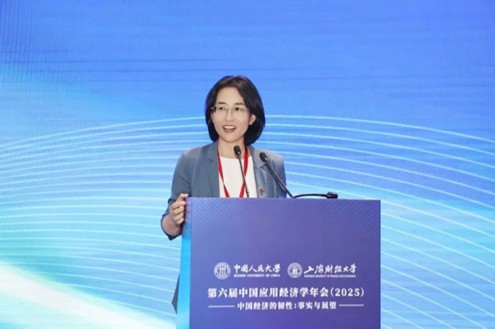
In addition to the main forums, the Conference set up 11 thematic sub-forums, covering core fields such as Finance, Public Finance, Labor Economics, International Trade, Regional Economics, National Economics, Digital Economics, and Econometrics. These sub-forums formed a multi-dimensional discussion map of China’s applied economics system.
The topics of the sub-forums closely aligned with the needs of the times, covering research frontiers such as AI in finance, fiscal and tax system reform, demographic and labor structure adjustment, coordinated regional development, and digital platform governance. At the sub-forums, scholars from institutions including Peking University, Tsinghua University, Fudan University, Wuhan University, Xi’an Jiaotong University, Sun Yat-sen University, and East China Normal University presented papers and conducted cross-comments. The on-site academic atmosphere was strong, with sufficient exchanges and interactions.
As an important annual conference in China’s field of applied economics, the Conference not only summarized the institutional experience of China’s economy in responding to external shocks, but also put forward new issues, new logics, and new paradigms for future development. In the future, applied economics will continue to take “problem orientation” as its beacon and “institutional innovation” as its engine, and write a more profound academic chapter in telling the story of China’s economy and contributing to global development solutions.