



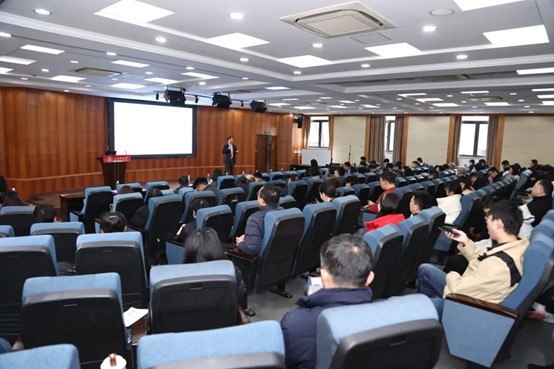
On March 6, 2025, the first 2025 lecture of “Dishui Lake Expert Insights” (the “Lecture”) was officially launched. At the Lecture, Professor CHEN Xin, Professor of Dishui Lake Advanced Finance Institute, Shanghai University of Finance and Economics (SUFE-DAFI) and Director of the Capital Market Research Center, delivered a compelling speech titled “2025: The Dawn of China’s Equity Asset Revaluation”. He conducted an in-depth analysis of market trends and investment opportunities for China’s equity assets amid major shifts in the international political and economic landscape.
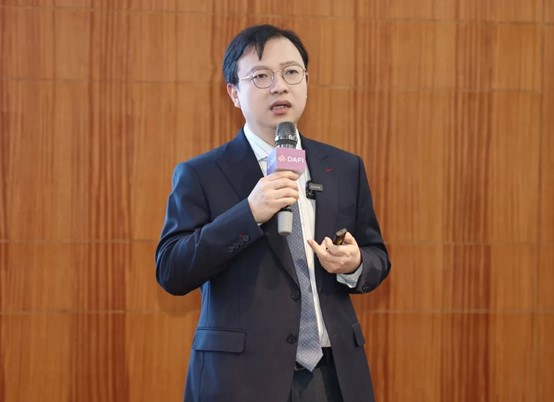
Professor CHEN began by reviewing the performance of China’s A-share and Hong Kong stock markets over the past five years. He emphasized that the drivers behind equity asset revaluation are complex and diverse, including economic cycles, technological cycles, financial cycles, fiscal cycles, domestic political cycles, and geopolitical cycles. Drawing on the latest policies from the Central Committee of the Communist Party of China (the “CPC Central Committee”), the State Council, and the People’s Bank of China (PBC), he provided a detailed breakdown of the policy context shaping equity asset valuation.
“Last September, the PBC introduced policy measures to intervene in the stock market – a first in previous practice,” noted Professor CHEN. “The central bank rolled out two new tools: swap facilities for securities, fund, and insurance companies, and reloans for stock repurchase and value appreciation. The elevation of promoting stock market stability and prosperity to a top-level national political priority sends an extremely positive signal.” Additionally, based on signals from the meeting of the Political Bureau of the CPC Central Committee in September 2024, the tightening cycle in China’s financial system, which began in 2018, may have bottomed out, and the policy environment is expected to become more accommodative moving forward.
In his market analysis, Professor CHEN pointed out widespread pricing distortions in China’s equity assets. On one hand, many central state-owned enterprises (SOEs) and local SOEs have long been subject to significant systematic undervaluation. “From a risk perspective, many central SOEs have strong resilience against economic fluctuations, with minimal risk of default or bankruptcy and low systemic risk,” he explained. “They also have priority access to national resources, strong profitability, and high dividend payouts – yet their valuations remain extremely low. For example, despite a sharp rise in A-share price of the Industrial and Commercial Bank of China (ICBC)since the end of 2022, its current price-to-earnings (P/E) ratio stands at just 6.6x, with a dividend yield still as high as 6.6%, leaving ample room for valuation growth.” On the other hand, some enterprises with high systemic risk or facing intense competition are likely to be significantly overvalued. Professor CHEN used cases like Seres, Cambricon, and Oriental Selection to illustrate his point: the market often assumed short-term robust earnings growth would persist and assigned overly optimistic valuations. Once the sustainability of this growth was disproven, stock prices may plummet sharply.
Professor CHEN argued that as the stock market ecosystem improved in the future, existing pricing distortions would gradually be corrected.
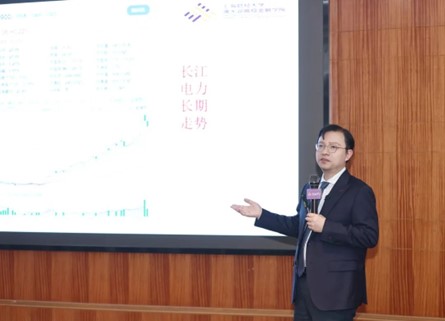
From a macroeconomic perspective, Professor CHEN Xin stated that China was in a painful transition period, shifting from a land finance model to a capital market-centered growth model. Current bottlenecks in economic development are concentrated in areas such as real estate, urban investment companies (UICs), household consumption, and exports. “First, we must stabilize the real estate sector and UICs, giving them room for transformation. Second, we need to increase the labor income of middle- and low-income households; a rising stock market can also drive growth in property income. Third, to address periodic overcapacity, enterprises need to ‘go global’, and this requires the backing and support of national strength.”
Professor CHEN concluded with six key takeaways: 1. There was room for short-term easing of geopolitical pressures on China under the Trump administration, which may trigger the reallocation of global financial capital; 2. China’s growing national strength would support enterprises in expanding overseas; 3. There were positive signs of recovery in the real economy, though the sustainability of this recovery remains to be verified; 4. Equity assets, particularly in the Hong Kong stock market, had overall room for valuation growth; 5. Some enterprises with heavy assets, high risk, and high valuations faced the risk of downward revaluation; 6. A new round of supply-side reforms under the dual control of carbon emissions would have a positive impact on China’s competitive industries.
The Lecture was hosted by Deputy Director SONG Shan from the Marketing and Branding Department, SUFE-DAFI.
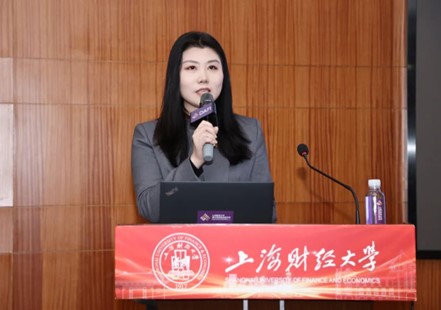
This event provided attendees with cutting-edge insights into the valuation of China’s equity assets and offered a unique research perspective for both academia and industry. SUFE-DAFI will continue to leverage the leadership role of academic platforms like “Dishui Lake Expert Insights”, delve into key issues in China’s economic development, and nurture high-end economic and financial talents with an international vision and strategic thinking.